





Why UK Defence Policy is Failing the Factory Floor Test
Last year, Made in Group members took the frontline realities of the UK manufacturing sector directly to key figures in Parliament. On December 1st, we are returning to Westminster with an expanded coalition to address a critical national vulnerability: the stark disconnect between the foreign policy rhetoric spoken by ministers and the actual operational reality of the UK’s industrial base.
Pictured: Jason Pitt, Made in Group, Lord Robinson former General Secretary of Nato and Lord Speller former Minister for Armed Forces and Lord Whitby Made in Group chair.
While the government has recently made headlines with the 2025 Strategic Defence Review and the Ministry of Defence’s July 2026 SME Action Plan, paper promises are not translating into industrial readiness. We have a political establishment dictating defence and trade policies that fundamentally lacks experience in military logistics, scaling businesses, or running industrial supply chains.
The Geopolitical Reality Check
Ahead of last year's reception, Made in Group CEO Jason Pitt spoke with a respected war professor regarding the societal tensions capable of degrading commercial activities. The takeaway was uncompromising: the UK is taking its position for granted.
Russia has transitioned to a total war economy, dedicating over 40% of its national budget to defence and security. Backed by a formidable base of 381,000 factories, and the looming spectre of China’s 1.1 million facilities should geopolitical alliances shift, this scale of industrial mobilisation is staggering. When we pan back and assess the UK's platform against this threat, the fragility of our domestic supply chains becomes a glaring national security risk.
Sovereignty, Ownership, and the SME Pathway
Ownership is a fundamental question of nation-state sovereignty. We cannot secure our defence capabilities without securing the industrial base that produces them.
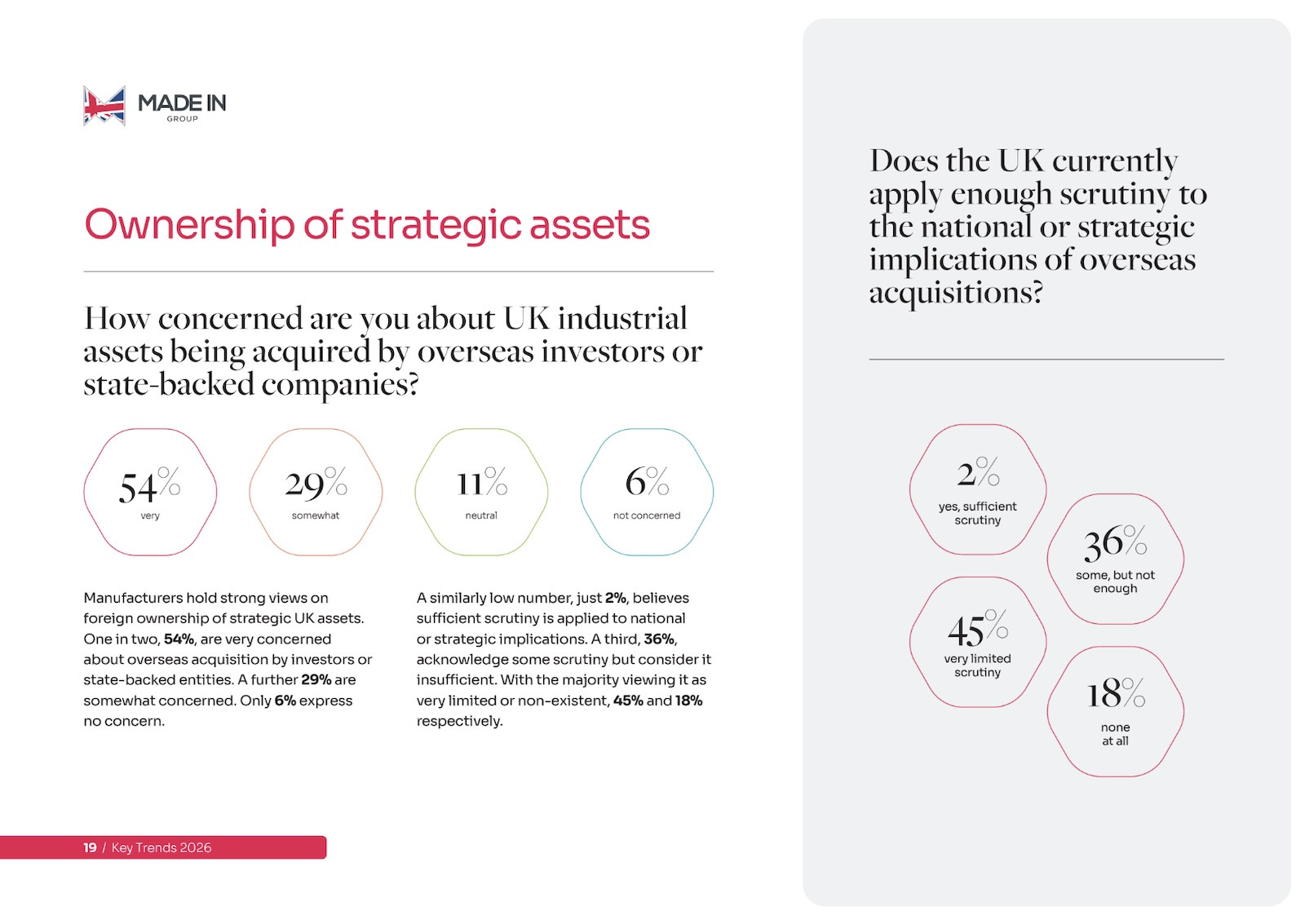
According to Made in Group’s Priorities for UK Manufacturing SMEs 2026 report, published in April, 83% of manufacturers are concerned about the overseas acquisition of UK industrial assets, and 81% judge current scrutiny to be insufficient or non-existent. Only 2% believe adequate scrutiny is currently applied to the national implications of foreign acquisitions.
We must give our Small and Medium Enterprises (SMEs) an organic pathway to become major players. Industrial giants like Rolls-Royce were once SMEs; we can cultivate that level of growth again without extending a begging bowl. It simply requires a government that understands how things are made and values domestic capability. Support for domestic prioritisation is unambiguous, with 74% backing public procurement that favours UK-made goods, and 83% supporting the prioritisation of domestic manufacturing even if it departs from strict free-market principles.
Policy Intent vs. Operational Execution
The government may point to their recent procurement reforms and SME initiatives, but our data proves these frameworks are systematically failing the businesses they are meant to support. SMEs represent 99% of all UK industrial businesses, yet 75% feel barely or not at all represented in industrial policy.
The systemic barriers preventing growth and scaling remain unaddressed on the factory floor:
-
Energy Infrastructure: Three in four manufacturers (78%) report moderate to severe operational impacts from energy costs, with 26% describing the situation as survival-threatening.
-
Skills Deficit: Skills shortages remain the leading long-term risk to growth (62%), costing the economy approximately £4bn in lost potential output as apprenticeship completions stall.
-
Inaccessible Funding: Despite new "action plans," the funding system remains inaccessible by design. Only 1% of SMEs find government funding easy to access, while 49% report significant difficulty. Current structures heavily favour massive prime contractors with dedicated bid and compliance teams.
The Credibility Gate
This operational disconnect is exactly why Made in Group has passionately campaigned for a dedicated Minister for Manufacturing. We need a "credibility gate" within our democracy, formal SME representation in strategy and governance that prevents inexperienced officials from making catastrophic decisions regarding our industrial and defence capabilities.
As Jason Pitt notes, manufacturing SMEs are not seeking subsidies or protection from competition; they are seeking a policy environment aligned with how they operate.
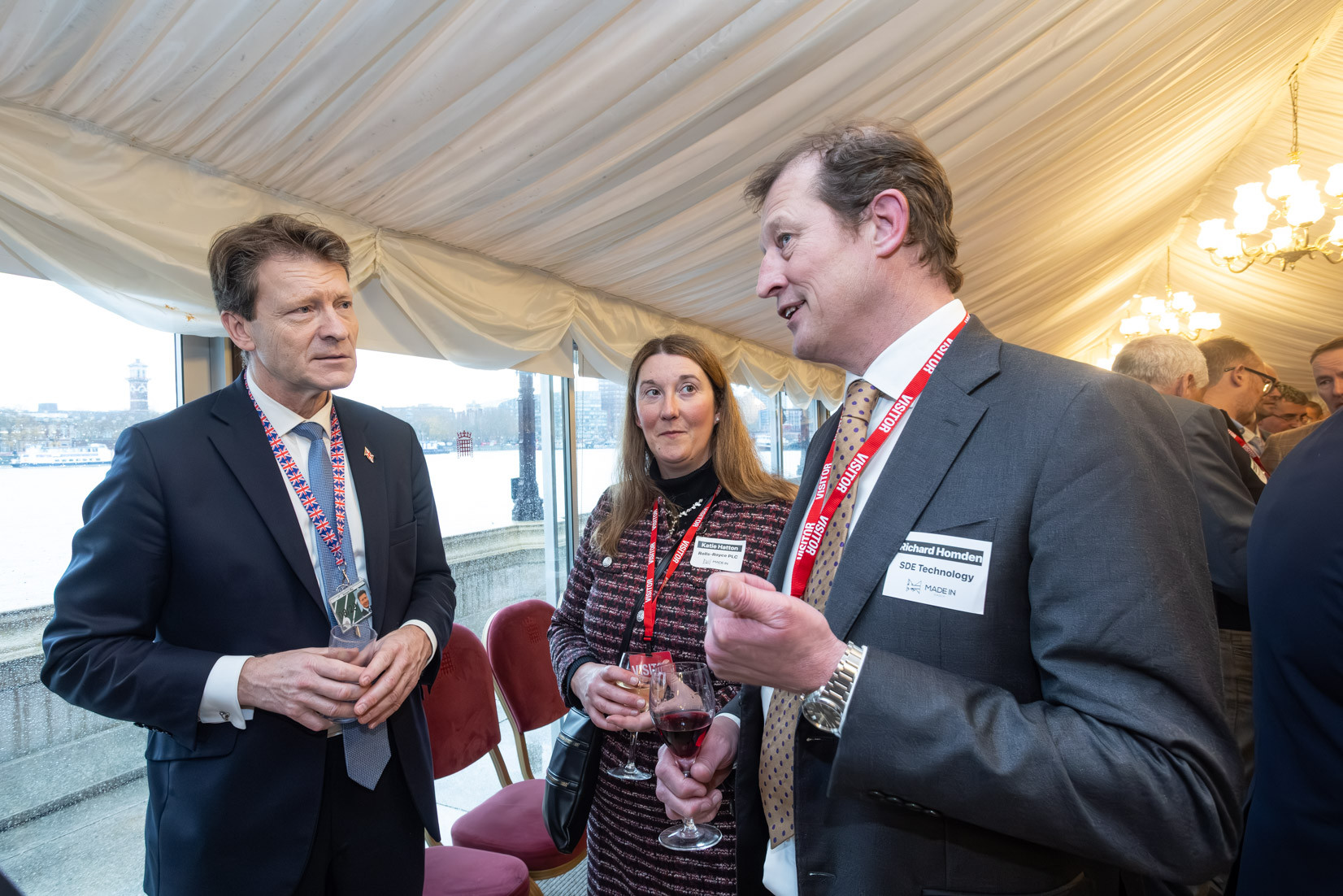
Pictured: Richard Tice Deputy Leader Reform with Richard Homden CEO of SDE Technology
Unlike other trade groups, Made in Group does not curate or filter your feedback to fit a biased political narrative. On December 1st, we are putting the authentic voices of the manufacturing community directly in front of policymakers. We will demand to know why, despite new action plans and procurement acts, local SMEs are still boxed out and burdened by survival-threatening energy costs. It is time the government faced the unvarnished reality of what it takes to defend and build a sovereign industrial nation.
Report can be read in full here