





Step-by-step clear coating process on aluminium: Process control validation, precision masking, and coating analysis.
Clear coating process on aluminium: A complete step-by-step overview.
Clear powder coating is a transparent protective finish applied over aluminium and other substrates to enhance durability, corrosion resistance, and surface appearance while maintaining the natural look of the material underneath.
Clear coating process at Powdertech’s INTRICOAT facility.
Key concern around clear powder coating
Clear coating success is not defined by the coating alone, but by the control and validation behind the entire process.
One common misconception still prevails amongst manufacturers that clear powder coating cannot deliver a high-quality aesthetic surface finish, particularly when applied on aluminium components.
However, through projects delivered via Powdertech’s INTRICOAT service, Powdertech has found that when clear coating is applied through a controlled powder coating process, it can deliver a high-quality aesthetic finish along with functional performance that is durable.
At the beginning of this project, Powdertech conducted a controlled in-house clear powder coating validation process on aluminium test coupons to assess:
- Coating build-up on surfaces and edges.
- The impact of masking techniques.
- The effectiveness of pre-treatment (Iridite NCP)
- Suitability of clear powder coating for aluminium components.
Below is an overview of each stage of the clear powder coating process to demonstrate how clear coat performance can be validated before full-scale production.
Step 1: Initial cleaning and process control checks.
Before any coating or pre-treatment, surface cleanliness and process consistency are critical.
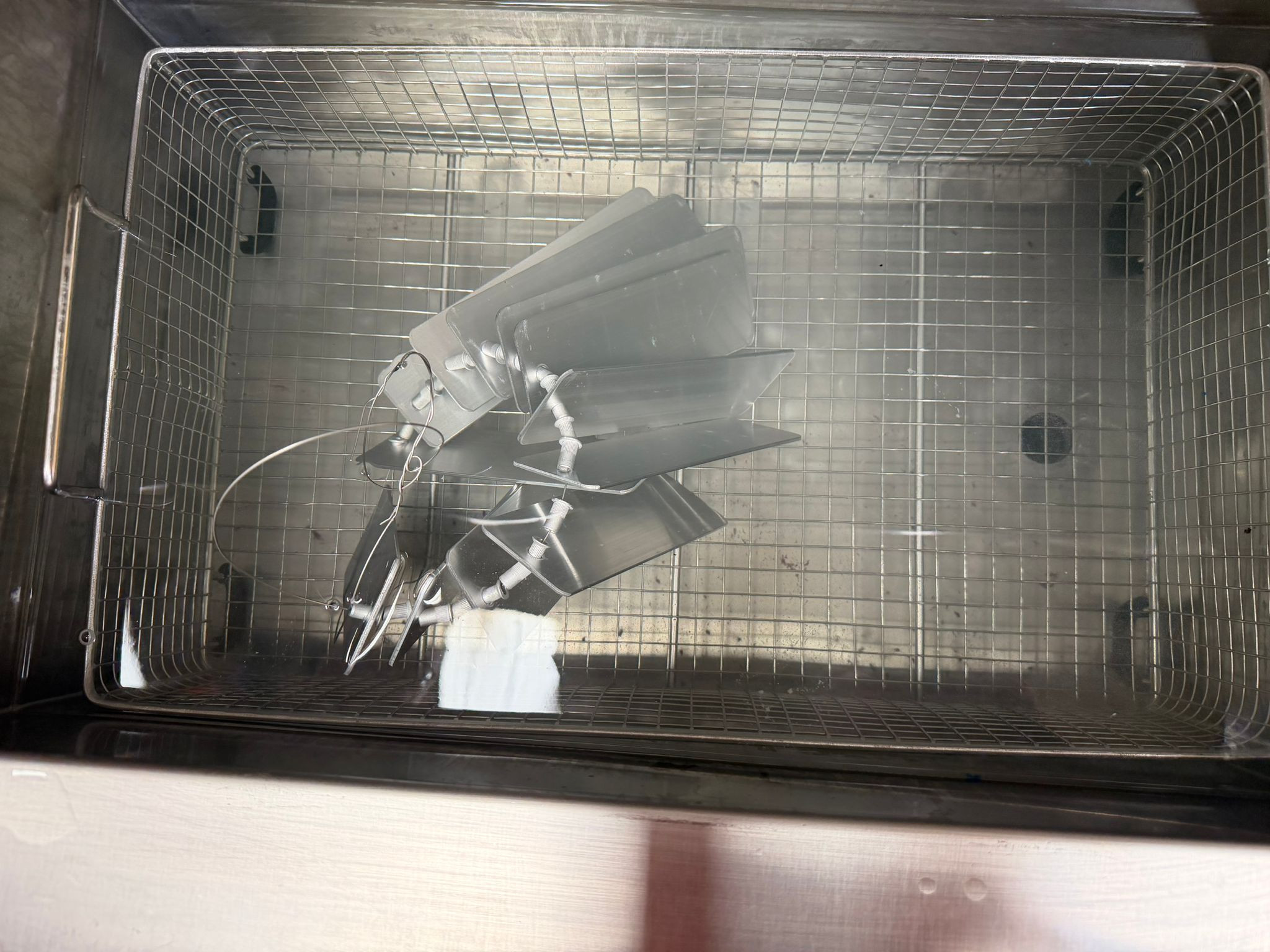
Ultrasonic cleaning
All aluminium samples were first cleaned using an ultrasonic cleaning system. This uses high-frequency vibrations to:
-
Remove fine particulates
-
Eliminate surface contamination
-
Prepare the substrate for a uniform pre-treatment process.
Process validation checks before Iridite NCP
Alongside cleaning, key control checks were carried out:
-
Temperature checks to ensure stable process conditions.
-
Conductivity checks to verify water purity.
These steps ensure that no external variables affect the coating outcome later in the process.
At Powdertech, clear powder coating is approached with the same level of precision and process control as any high-performance powder coating application.
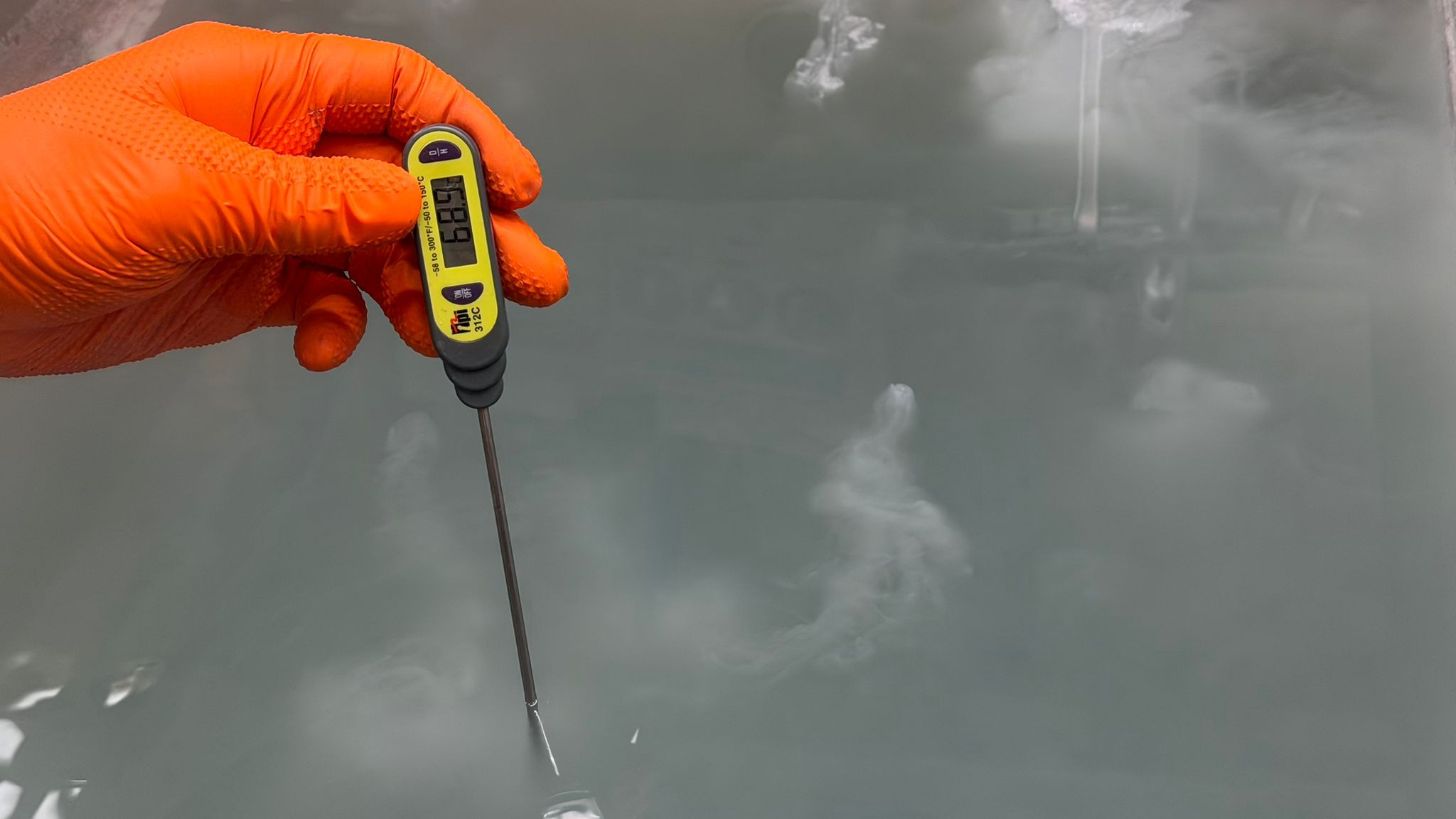
Temperature and conductivity check before Iridite NCP.
Step 2: Iridite NCP pre-treatment process.
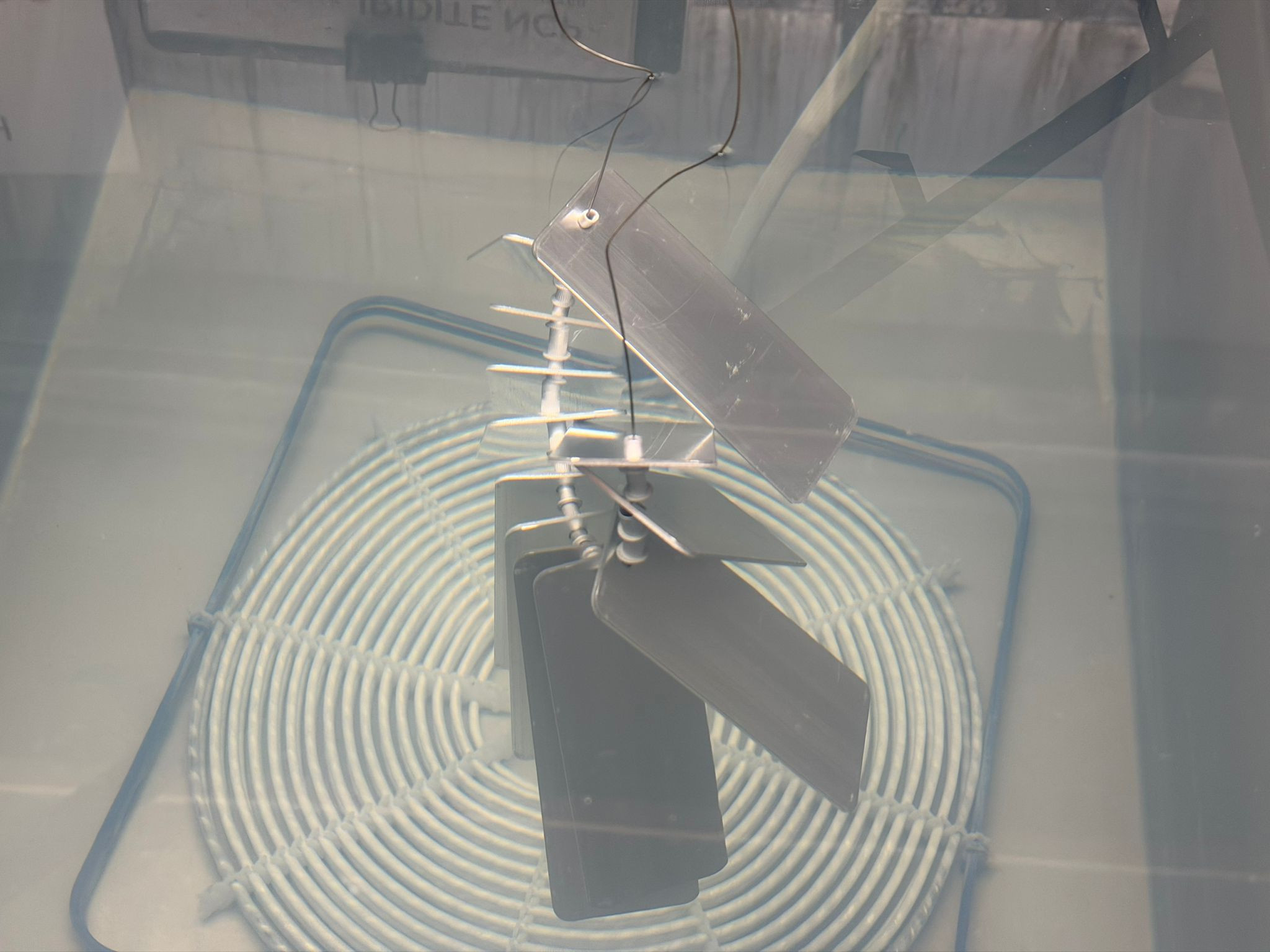
Following cleaning, the aluminium test coupons undergo Iridite NCP (chromate-free conversion coating).
The pre-treatment stage is critical for:
-
Enhancing corrosion resistance.
-
Improving coating adhesion.
-
Creating a consistent surface for clear coat application. Aluminium coupons during the pre-treatment (Iridite NCP) process.
Step 3: Spot testing to validate the pre-treatment (Iridite NCP) process.
To confirm the effectiveness of the pre-treatment, spot testing is carried out on additional aluminium test coupons.
Test method
A chemical solution is applied to one pre-treated aluminium test coupon (Iridite NCP applied) and one untreated aluminium test coupon.
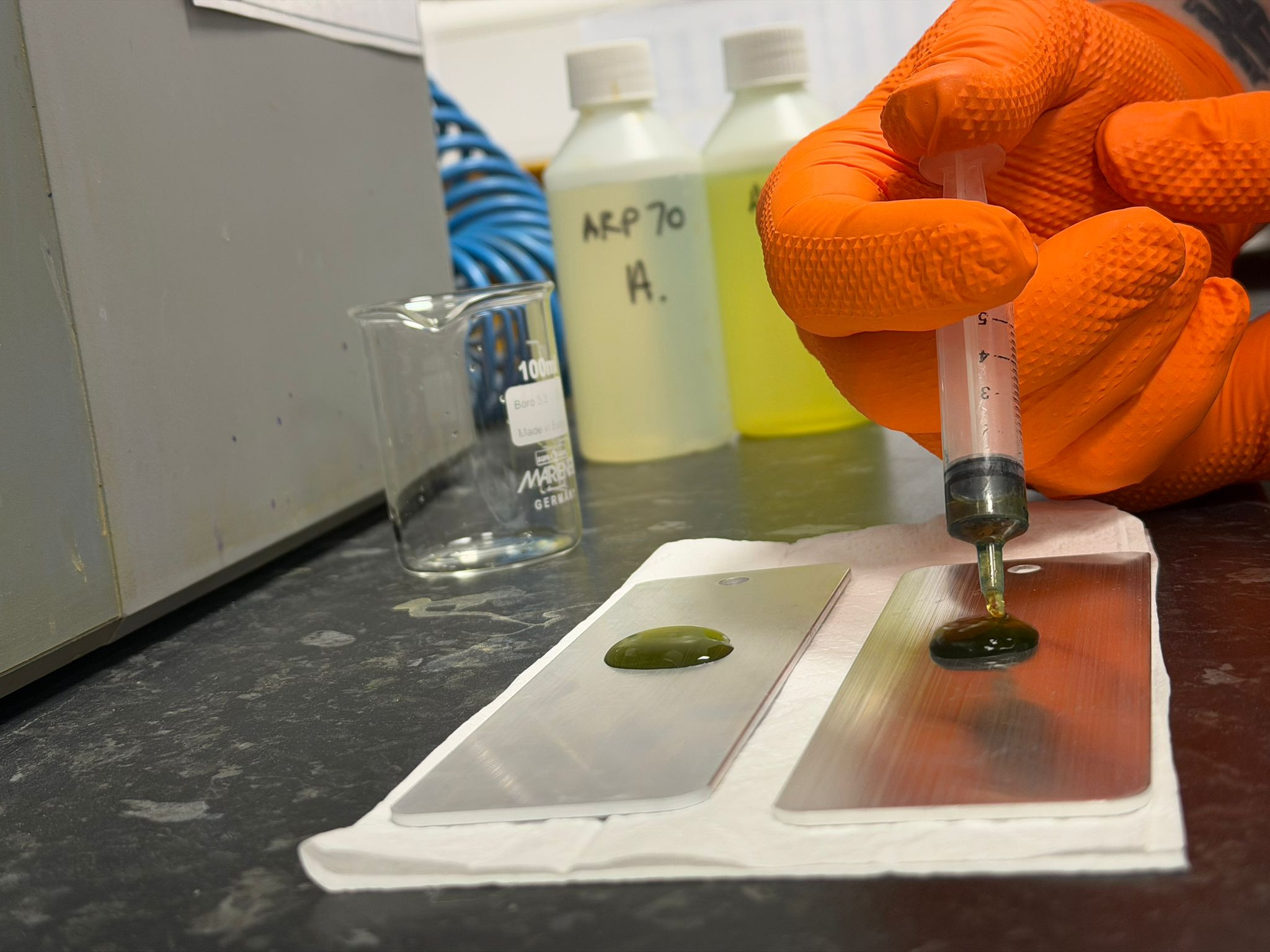
Applying chemical solution to aluminium test coupons.
Observed results
- Pre-treated sample: The chemical did not penetrate the surface (no darkening), indicating effective protection.
- Untreated sample: The surface darkened, showing chemical penetration and lack of protection.
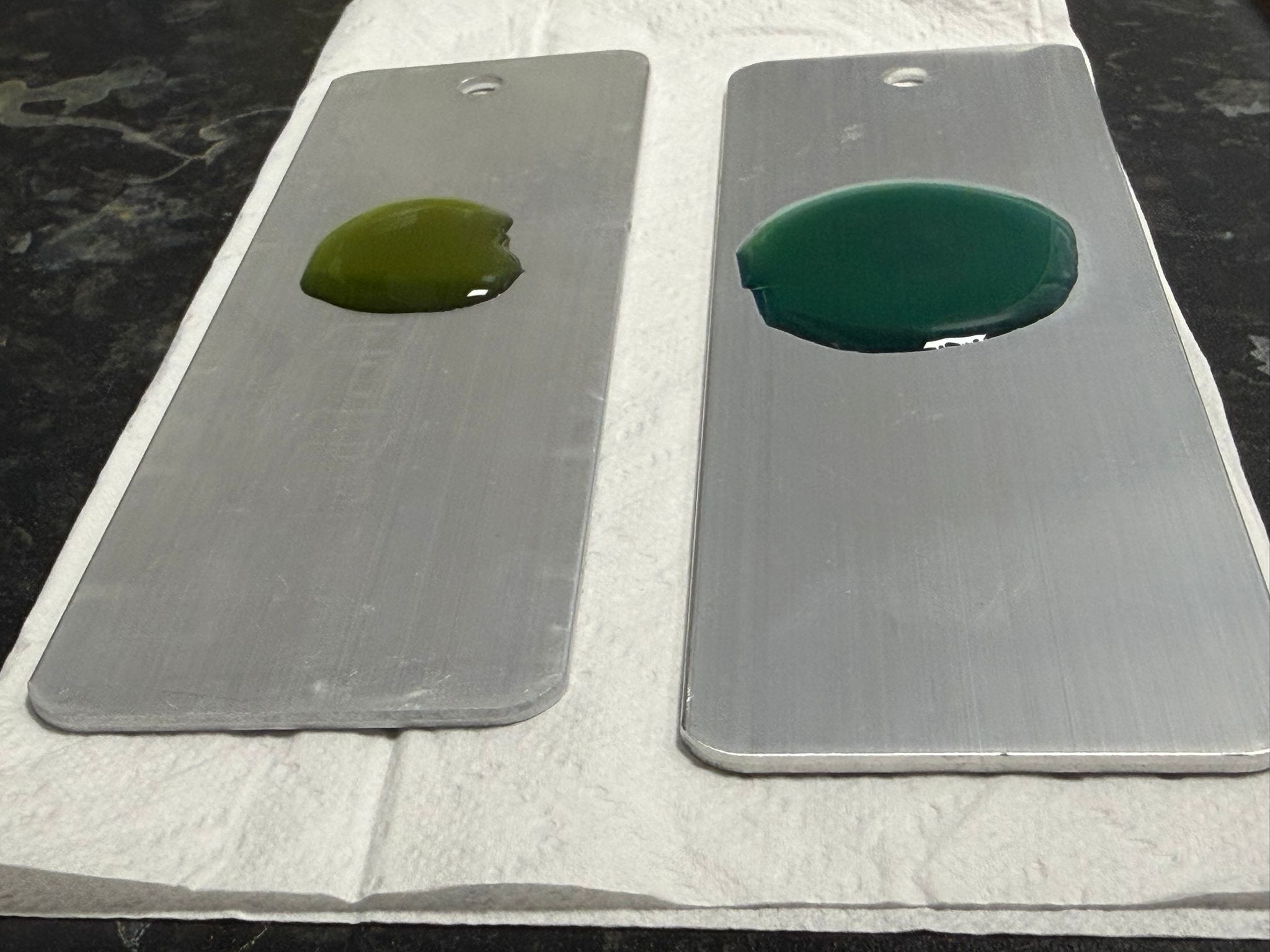
Untreated aluminium test coupon (right) shows a darkened surface, as compared to the pre-treated aluminium test coupon (left). This validation step confirms that the pre-treatment (Iridite NCP) layer is present before moving ahead with further clear powder coating steps.
Step 4: Precision masking before clear coating
Masking plays a critical role in understanding coating behaviour, especially for precision components. High-temperature polyimide tape (suitable for curing conditions) is used for masking application.
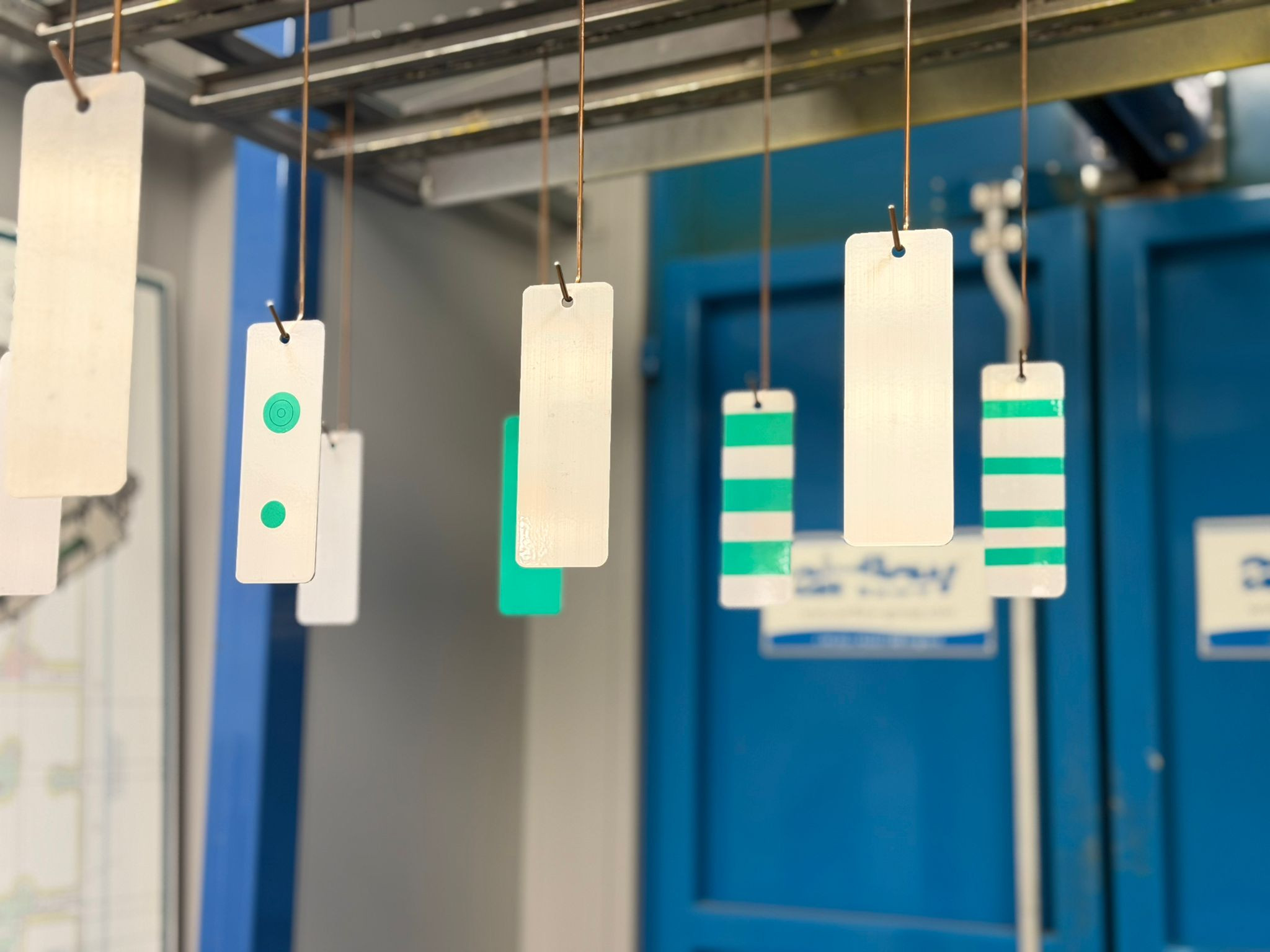
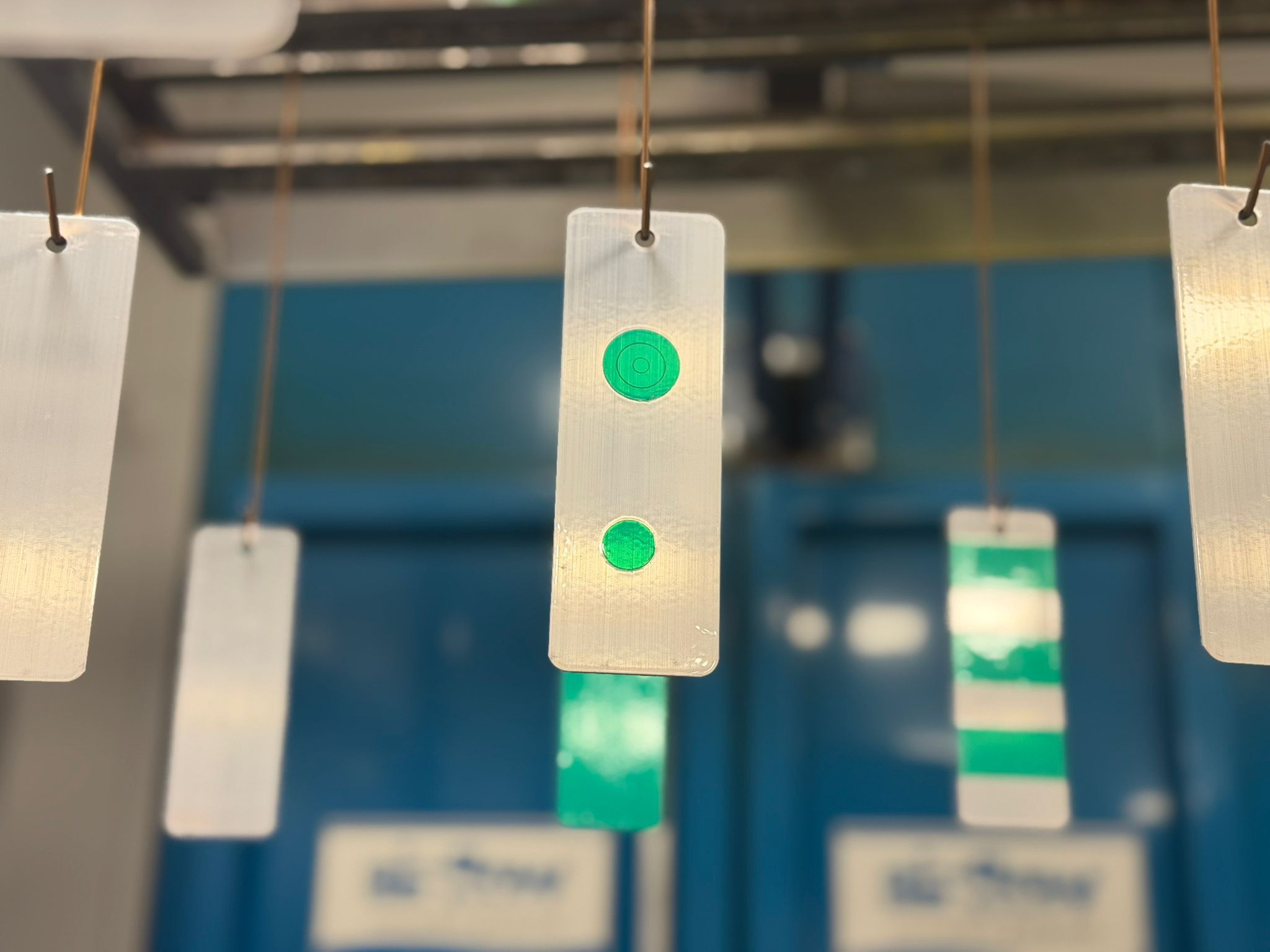
Four aluminium coupons were prepared using different masking approaches:
- Fully masked panel - Used to assess coating build-up along the edges.
- Strip masking - Used to evaluate linear film build-up around the masked area.
- Circular masking patterns - Used to observe coating distribution on defined areas.
This approach allowed for detailed analysis of how clear powder behaves across different geometries and boundaries and helped us to take the right actions early on.
Step 5: Electrostatic clear powder coating application and curing.
The samples were then coated using an electrostatic clear powder coating process at Powdertech’s INTRICOAT facility (controlled enclosed room).
This method:
- Charges powder particles to achieve uniform coating to the substrate.
- Enables controlled clear powder coating application.
- Supports consistent coating thickness across the substrate.
Clear powder is applied across all prepared aluminium test coupons, ensuring consistent parameters throughout the process. After coating application, the clear-coated aluminium coupons are ready for curing at 180°C.
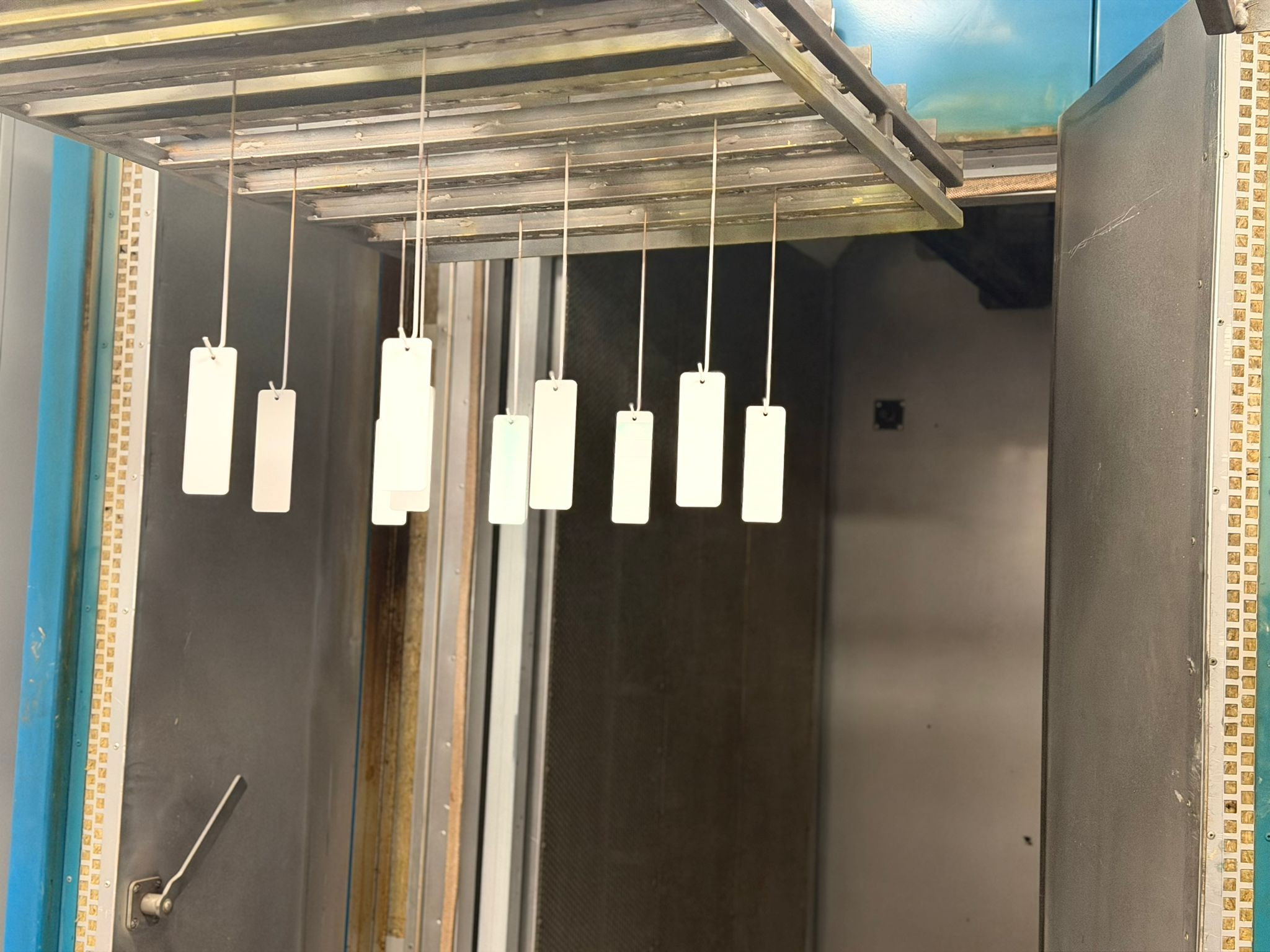
At this stage:
- The powder melts and forms a continuous, durable, clear coating layer.
- Finalises adhesion and surface finish.
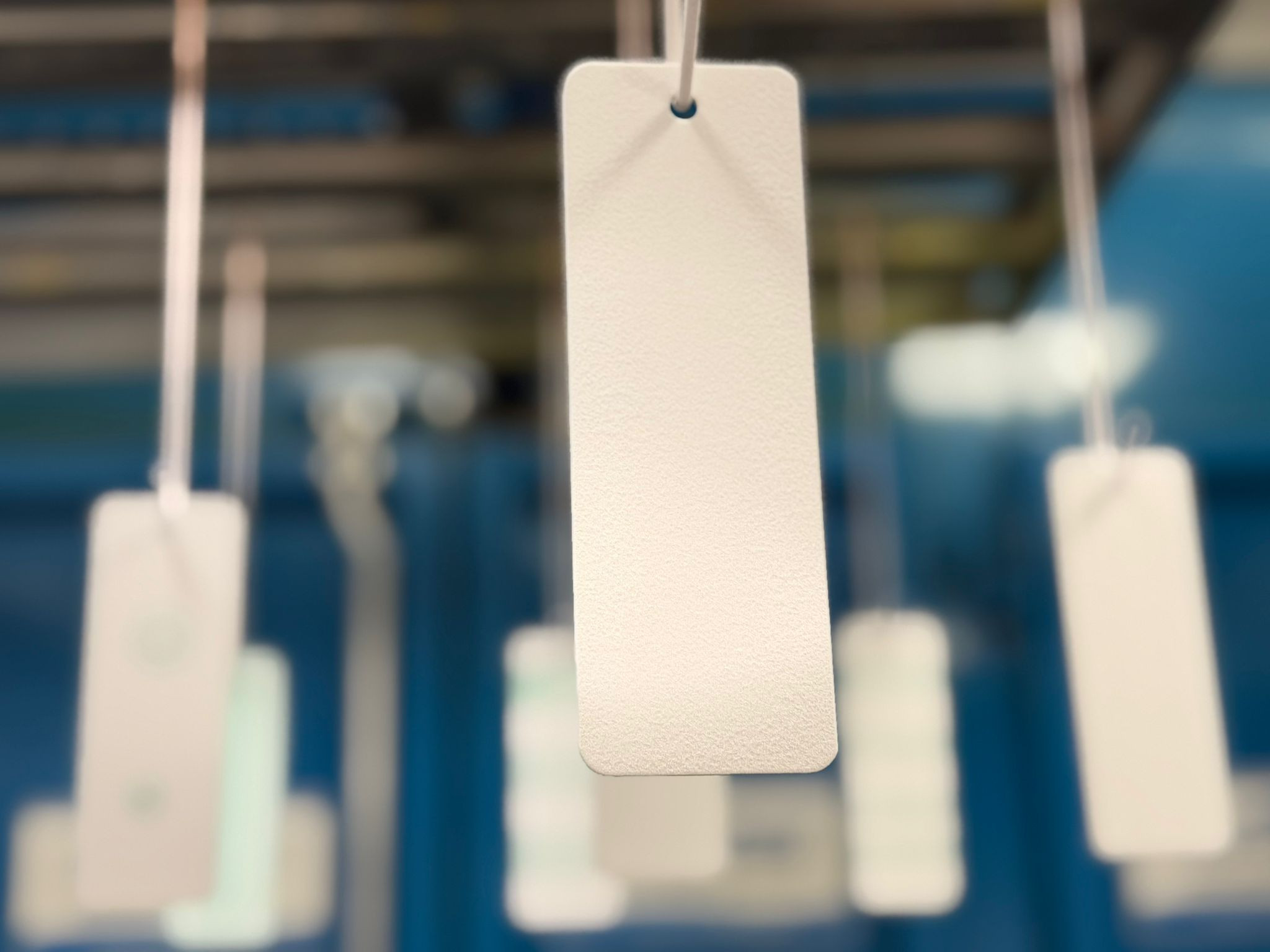
The result was a fully cured, clear coat across all masking configurations.
Results and observations
The process provided clear insights into coating behaviour:
- Edge build-up
Increased film build was observed along masked edges. This is critical to note for components with tight tolerances or mating surfaces.
- Surface distribution
Masked patterns revealed how powder accumulates across different geometries.
- Pre-treatment impact
The Iridite NCP layer ensured consistent coating adhesion. Untreated surfaces would be at risk of failure in real-world conditions.
- Process control importance
Cleaning, conductivity checks, and validation testing all contributed to consistent results.
Why does clear powder coating application testing matter?
Prior process development work on aluminium test coupons before full-scale production shows how a properly managed powder coating process can achieve both the protective performance and aesthetic finish customers expect from clear powder-coated aluminium components.
This level of testing and development early on can save manufacturers production time and cost and helps answer key questions that are asked often only at the production stage-
- Will coating thickness remain within tolerance?
- How will edges behave under coating?
- How to tackle the film build-up challenge early on?
- Is pre-treatment sufficient for long-term performance of clear coating?
.png)
Read and download Powdertech’s checklist ‘Design your finish at the start’.
Why partner with Powdertech?
At Powdertech, coating is not just about application; it is about understanding the process, validating the coating, and assuring performance throughout every stage.
Clear coat is particularly unforgiving of surface damage. Any abrasions to the natural surface of extruded, pressed, or machined aluminium can remain visible through the finished coating. Careful evaluation of handling and jigging methods throughout the process is therefore essential.
Powdertech understands these requirements and how to address other critical coating challenges to achieve a consistent, high-quality finish.
They work closely with customers to:
- Validate coating systems before production.
- Optimise masking and coating application early on.
- Ensure compliance with real-world performance requirements.
- Reduce risk when transitioning between coating technologies.
If you are exploring clear powder coatings, the Powdertech team can support you from process development to production.