






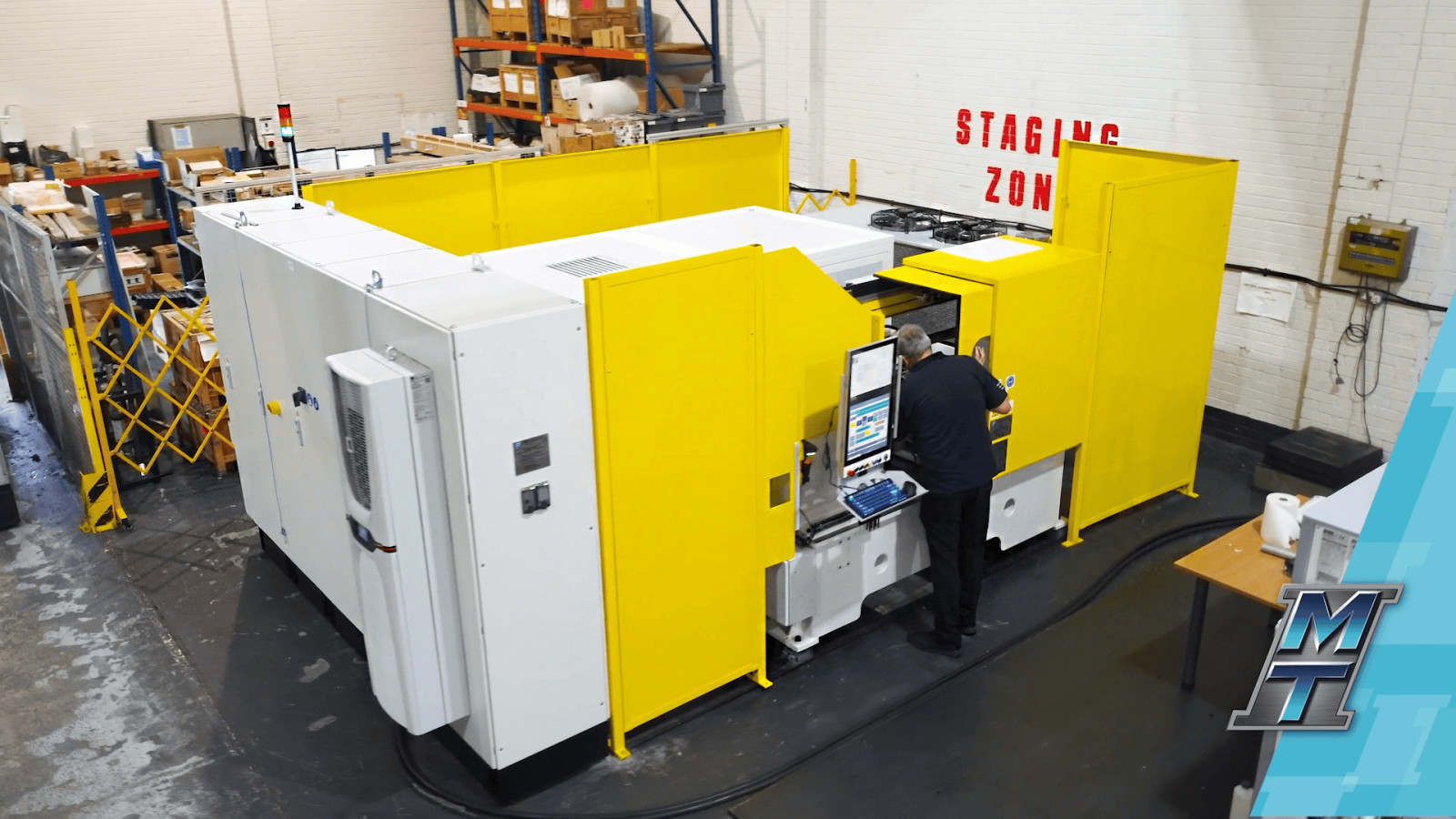
Scaling Inertia Friction Welding for Larger Turbocharger Components
As our customer's turbocharger designs continue to evolve, driven by efficiency targets, emissions regulations, and higher operating temperatures, the friction welding machine behind them had to scale.
In this instance, an increase in component size required a step up in machine capacity to maintain weld integrity and process stability. The 220S Inertia Friction Welder was selected to accommodate the larger part geometry, providing greater energy capability than the customer’s existing bespoke equipment while preserving the repeatability required for production environments.
The system is configured with an electric spindle drive and a maximum speed of 3,000 RPM, enabling precise control of rotational speed and energy input throughout the weld cycle. This level of control is particularly important when joining dissimilar materials such as Steel to Inconel, where thermal expansion rates, heat distribution, and metallurgical characteristics must be carefully managed.
Inertia friction welding is especially well suited to these applications. As a solid-state process, it eliminates melting, reducing the risk of defects typically associated with fusion welding such as solidification cracking or unwanted microstructural changes. The controlled energy input and rapid cycle times make it ideal for high-integrity turbocharger components that must withstand extreme rotational speeds and elevated operating temperatures.
At MTI Welding, supporting advanced manufacturing across the Midlands means delivering solutions that grow with our customers. From bespoke systems to higher-capacity installations such as the 220S, our focus remains the same: providing dependable friction welding technology that meets evolving production challenges head-on.