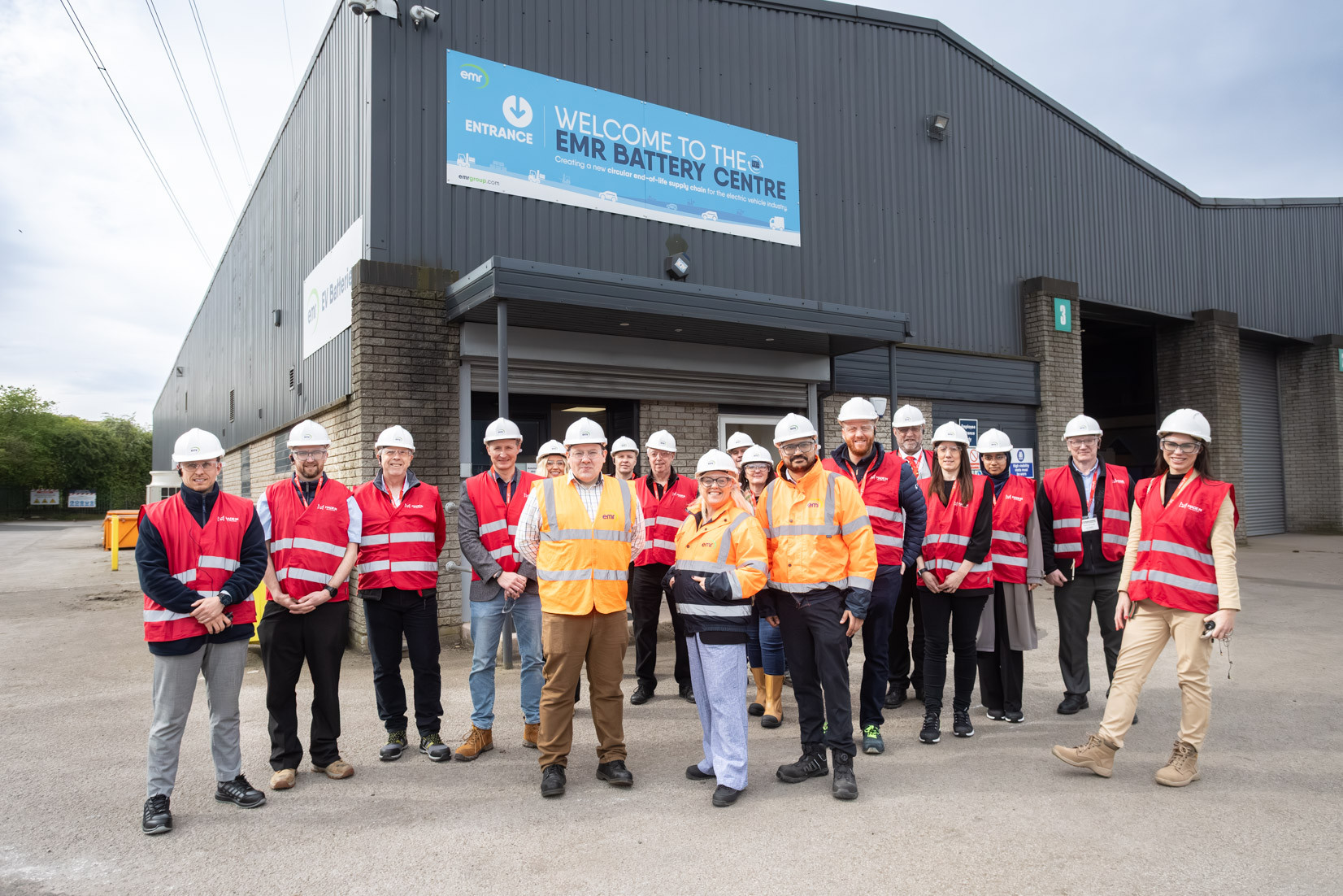






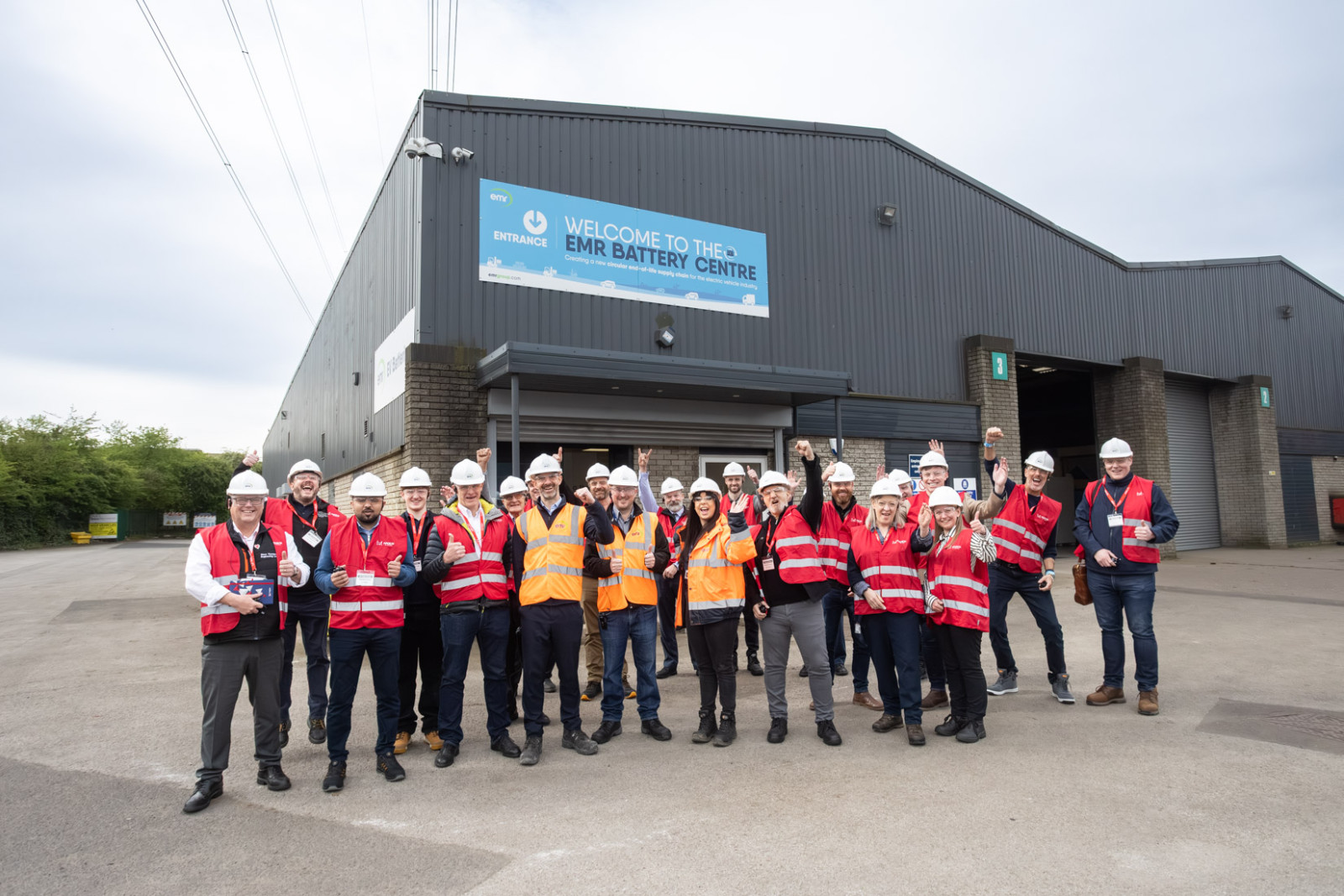
Factory Tour at EMR: Where Battery Recovery Meets Yard-Scale Processing
Some factory tours leave a lasting impression because they open up a part of industry that usually remains out of sight. That was certainly the feeling at EMR in Birmingham, where Made in Group members gathered to explore a part of manufacturing few businesses ever get to see up close - what happens when electrification reaches the other end of the lifecycle.
The morning also offered valuable time for networking, bringing together members from across the Made regions to share perspectives, make connections and explore a challenge that is becoming increasingly relevant across UK manufacturing.
This was not a tour about scrap in the traditional sense. It was a tour about recovery, responsibility and the systems now being built around both.
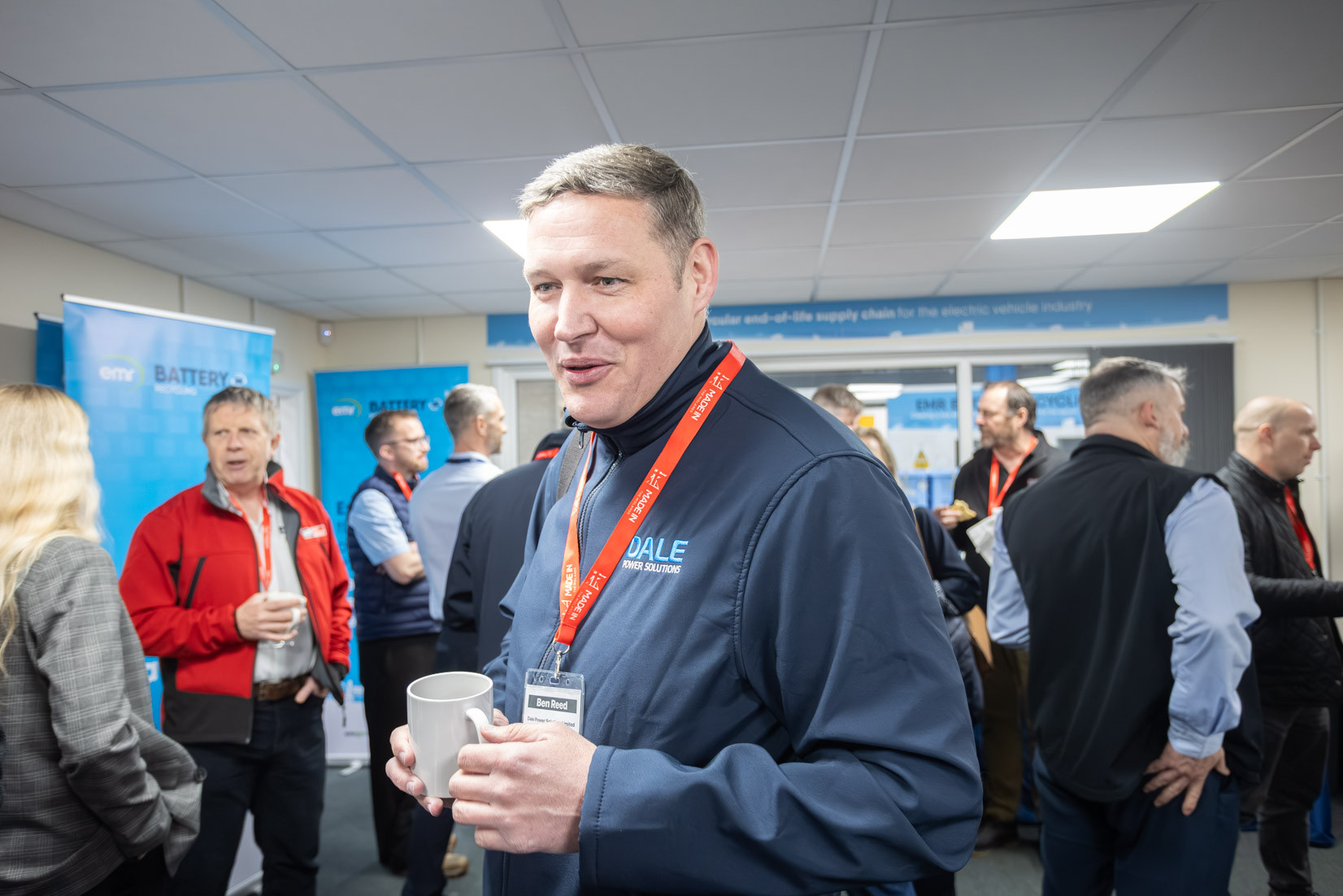
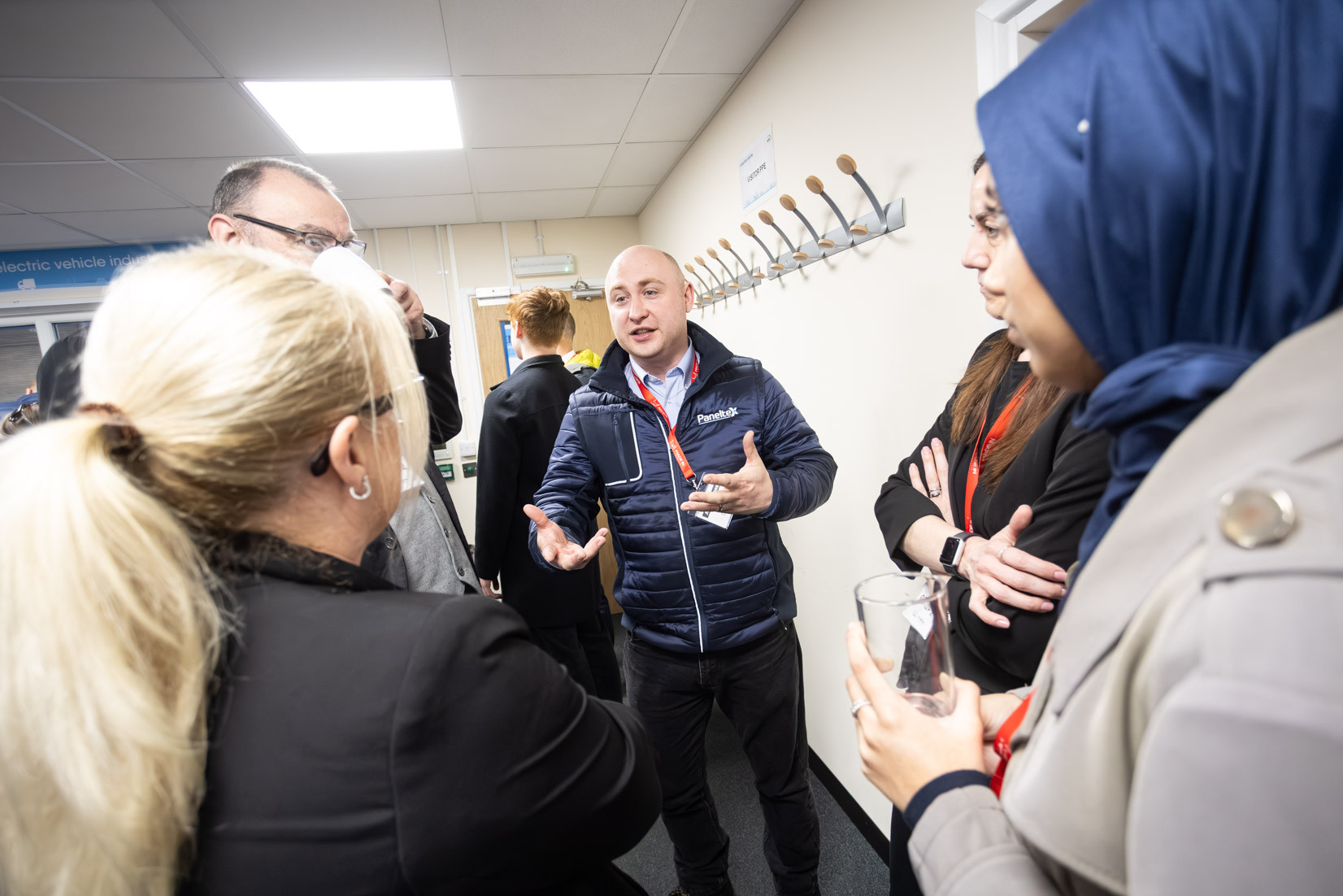
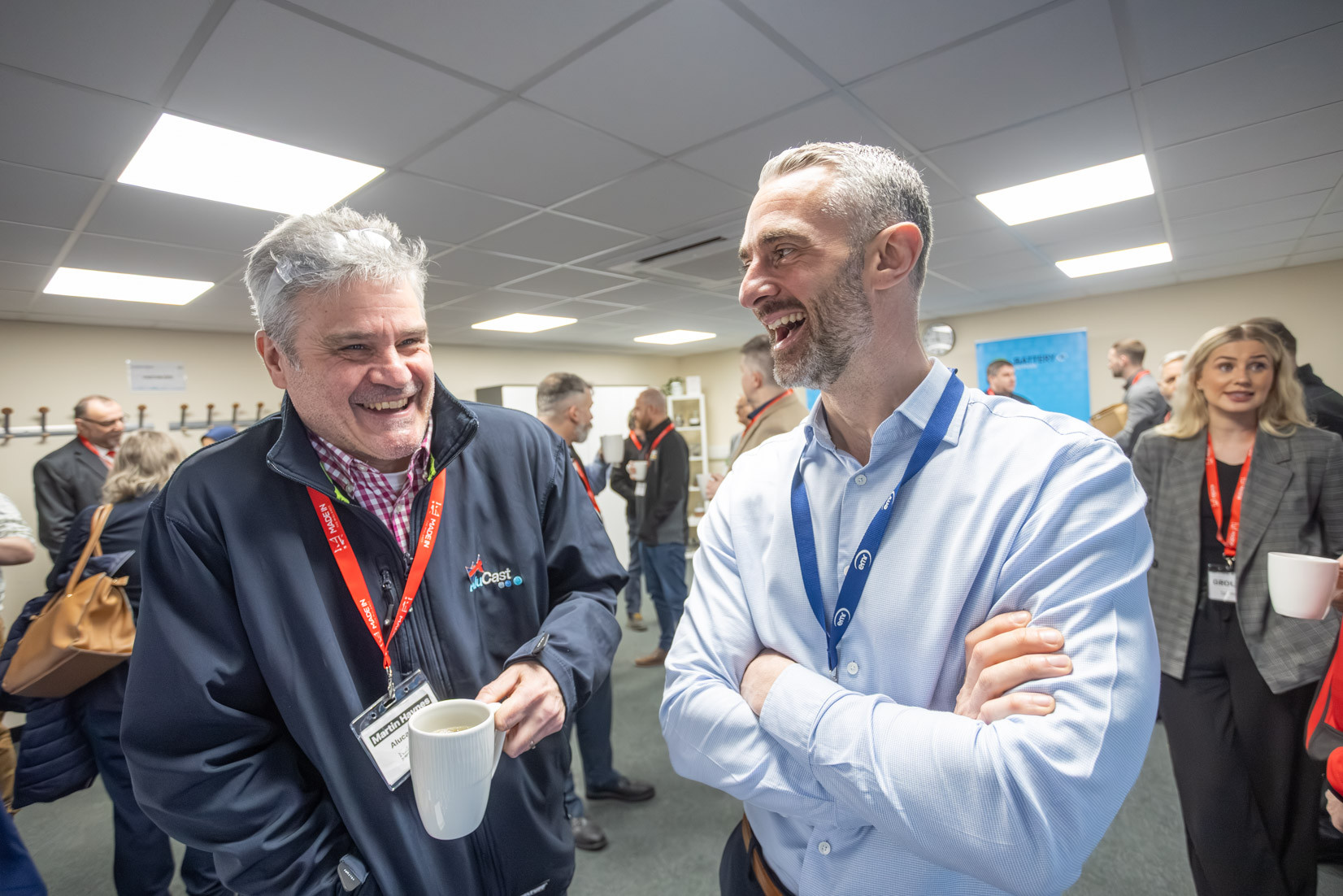
Networking before the tour began, as members from across the Made regions connected over coffee at EMR.
A morning grounded in real industry questions
Jason Pitt, CEO of Made in Group, opened the visit by placing the day in a wider industrial context. Despite the noise surrounding the economy, he pointed to a more encouraging signal from the shop floor, noting that UK manufacturing had now recorded six consecutive months of growth. From there, he turned to the real theme of the day - the "urban mine" - and the growing importance of recovering the materials that already exist within the economy.
That framing mattered because the room itself reflected just how relevant the subject has become. In attendance were manufacturers, suppliers and specialists already thinking about electrification, storage, end-of-life and energy use in their own businesses. During introductions, Tim Hobbs, Technical Director at OE Electrics, summed it up neatly: "We started in AC power, we now do DC power which involves lots of batteries and I'm interested to see how those are recycled for my customers."
It was a simple line, but it captured the mood perfectly. This was not passive interest. The subject was already moving closer to members' own operations.
_1.jpg)
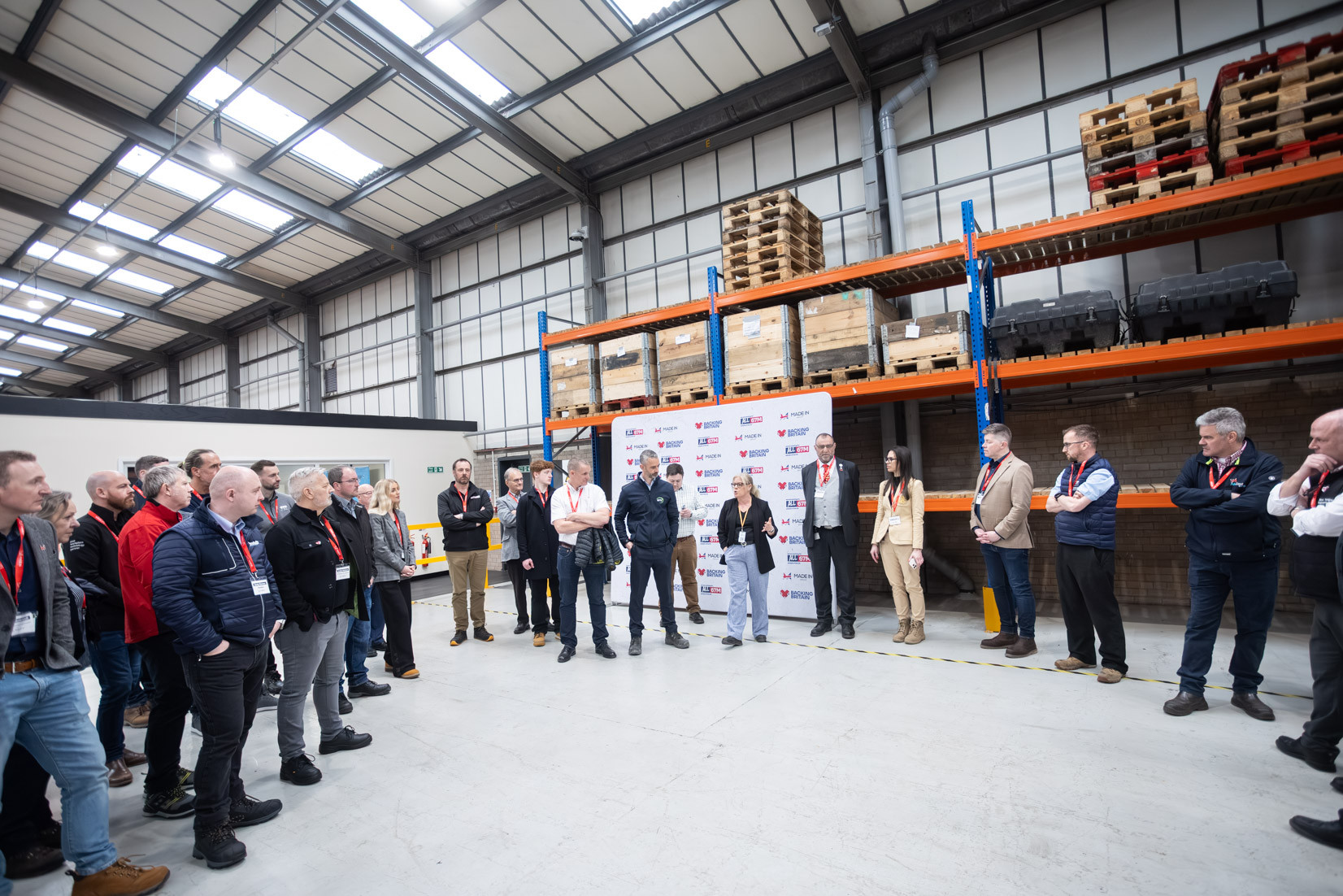
Following the round-robin introductions, Helen Waters, Commercial Director for End-of-Life Vehicles and EV Batteries at EMR, set the scene for the Factory Tour and the wider conversation around battery recovery.
From scrap to responsibility
Helen Waters, EMR's Commercial Director for End-of-Life Vehicles and EV Batteries, gave the day its real frame.
She explained that EMR handles around 10 million tonnes of material each year across roughly 60 UK sites, with the Birmingham battery centre focused on one of the fastest-moving areas in modern industry. Though the facility is only around three years old, it already sits at the centre of a much bigger shift.
"It's actually material that needs to be recycled," she said. "You have producer responsibilities that say you have to do that."
That line cut through the softer language that often surrounds sustainability. Helen did not speak about recycling as a side issue or a tidy-up job for later. She pushed the question back to the start of the chain.
"What are you designing today that will need to be recycled?"
It was exactly the right challenge for the room. Products may leave the factory in perfect condition, but someone still has to deal with them 10 or 15 years later. The decisions made at the beginning shape the cost, complexity and recoverable value at the end.
Helen also made clear that EMR is not simply reacting to what arrives at the gate. The business is working with universities, government and industry bodies to understand what the future of battery recovery will require. That gave the site a different feel. It did not feel like a static operation. It felt like a working response to a live industrial question.
Inside the battery centre
The battery facility immediately challenged expectations.
It did not feel chaotic. It felt controlled.
Guided by Andrew Spencer, General Manager of EV Battery Recycling at EMR, members were given an up-close view of the systems and disciplines behind safe battery handling. Before a battery even enters the building, EMR triages it by condition. Higher-risk units go into red-labelled containers fitted with fire suppression, gas monitoring and temperature control. Thermal imaging watches the yard for signs of trouble, and the team can respond quickly if something starts to change.
That sense of control continued inside.
One of the strongest lines of the morning came as Andrew walked members through the process: "With a battery, it doesn't just store energy."
That simple point opened up the real complexity of what sat in front of the group. A battery pack also contains electronics, cooling systems and power management systems. It arrives not as one object, but as a tightly managed system layered with both risk and value.
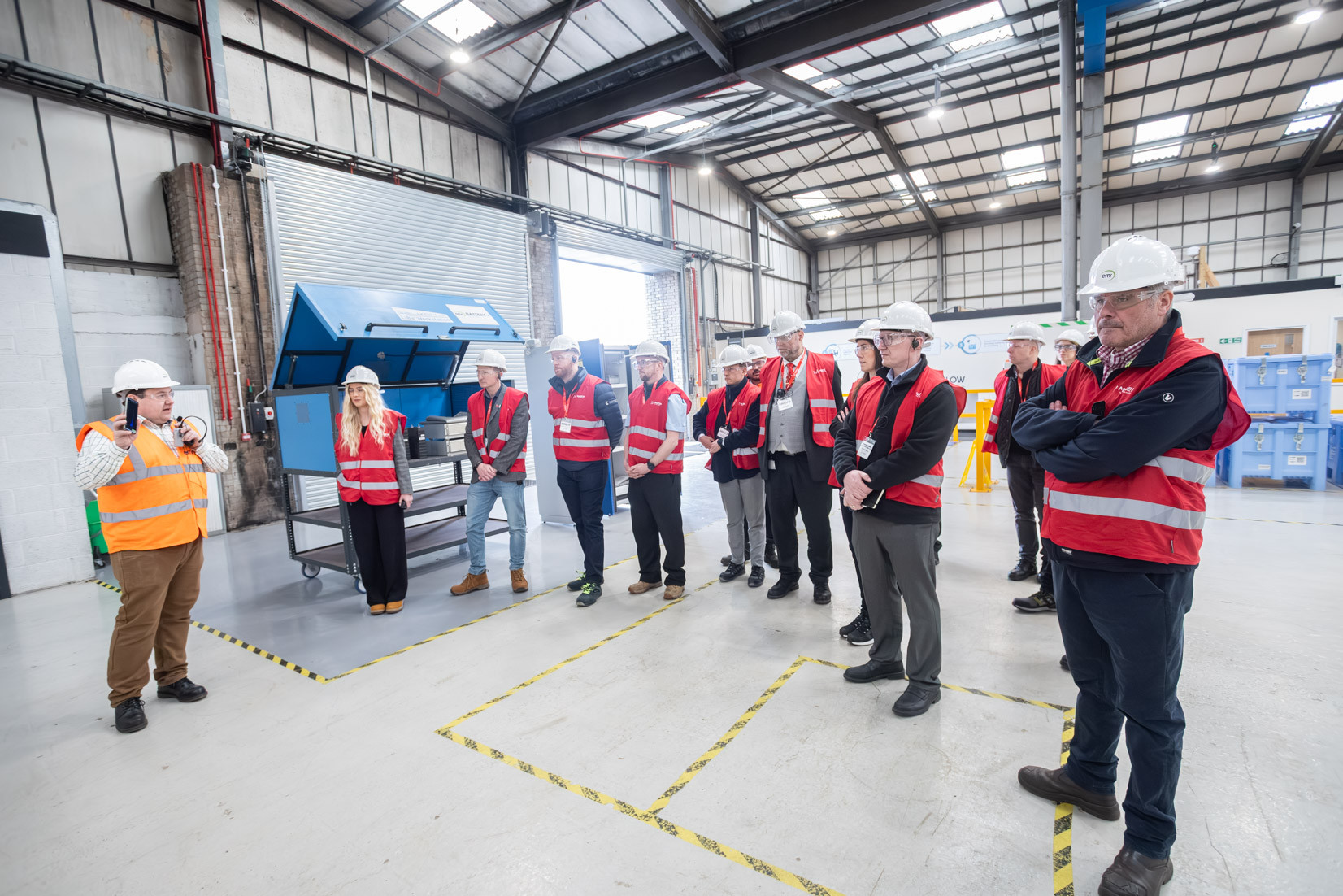
Andrew Spencer, General Manager of EV Battery Recycling at EMR, leads members through the battery facility, explaining the processes and controls behind safe battery recovery.
Forensic engineering in action
The discharge pod was one of the most revealing stops on the tour.
Here, members saw a Nissan Leaf battery being monitored through EMR's own in-house hardware and software, with live data visible on a phone while one of EMR's technicians connected the pack to the discharge equipment. Before dismantling begins, the team removes the energy safely and feeds it back into the grid.
"The main part of this pod is to neutralise the energy," Andrew explained.
That moment shifted the whole idea of recycling into something much more precise. This did not look like disposal. It looked like forensic engineering.
Once discharged, the work slows down even further. Modules are separated, components are weighed, photographs are taken and processes are documented. EMR is not simply taking batteries apart. It is building knowledge from every single one that comes through the facility.
That knowledge matters. It feeds directly into commercial judgement - what is worth recovering, where the value sits, how long removal takes, and what route makes sense for each component. The team spoke openly about off-take routes, break-even points and the value hidden in parts that could easily be overlooked.
As Andrew explained, a battery is far more than the chemical material inside it. It is a complete engineered system, with multiple components, materials and recovery routes.
Again, the point carried more than it first seemed to. The opportunity does not sit only in lithium, nickel or cobalt. It sits in understanding the wider architecture around those materials and recovering value with precision rather than assumption.
The tour also underlined how quickly this part of the sector is evolving. As battery volumes increase and recovery pathways continue to develop, EMR is already investing in the expertise, processes and long-term capability needed to stay ahead. With ambitions to bring even more of the process in house over time, the business is helping shape the next phase of battery recovery in the UK.
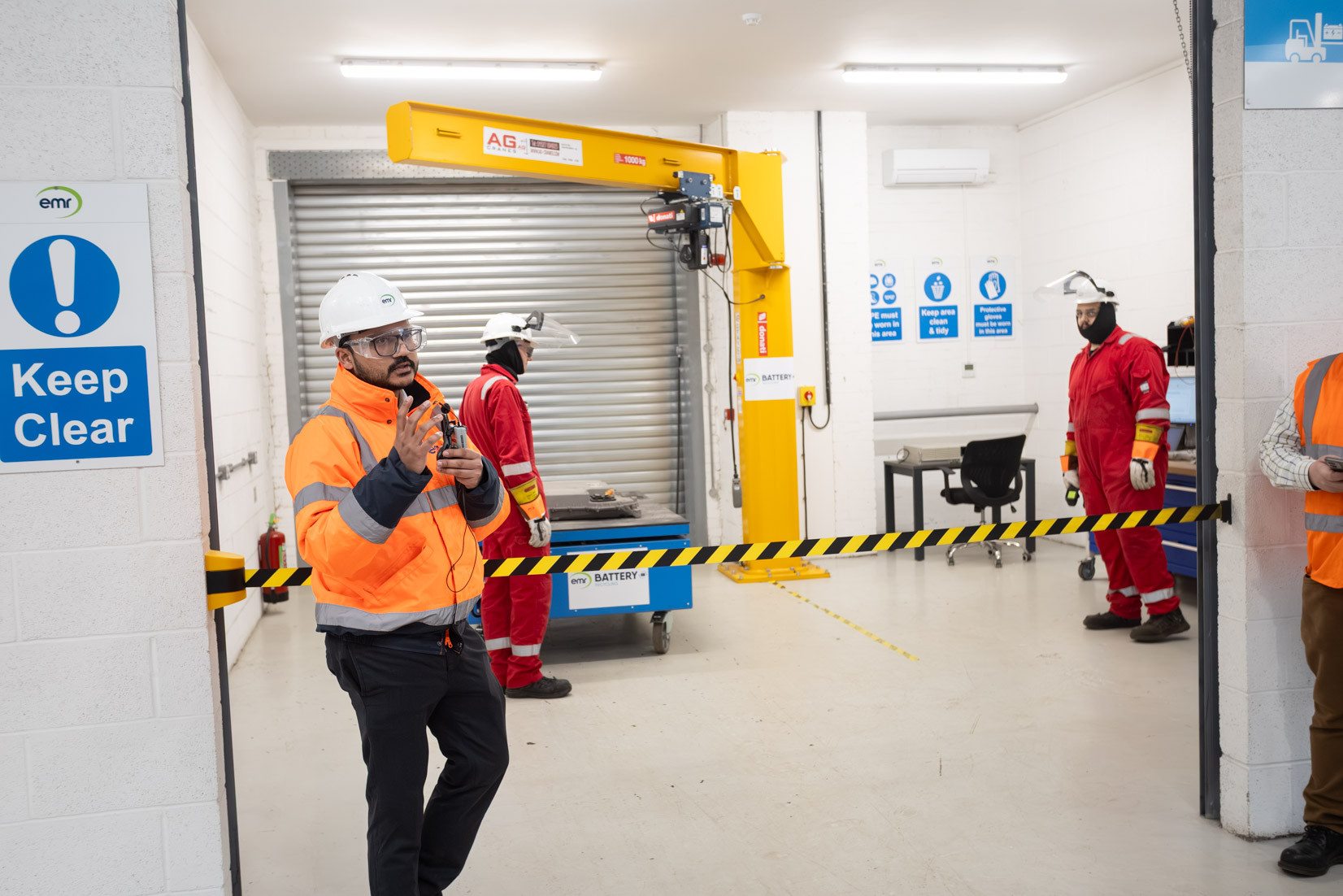
Inside the battery centre, EMR’s team demonstrated the handling environment and controls used to support safe battery recovery.
From battery centre to yard-scale processing
If the battery centre is about precision, the main yard is about force.
Here, the visit shifted gear completely.
Members moved out to the shredder side of the operation, where the scale of EMR's work became impossible to ignore. Led by Oliver Latham - General Manager, EMR Birmingham, the group stepped into a very different environment - one dominated by cranes, feed systems and the constant movement of material across the site. At the centre of it all stood EMR's 6,000-horsepower shredder.
But even here, what stood out was not just the machinery - it was the skill and decision-making behind it.
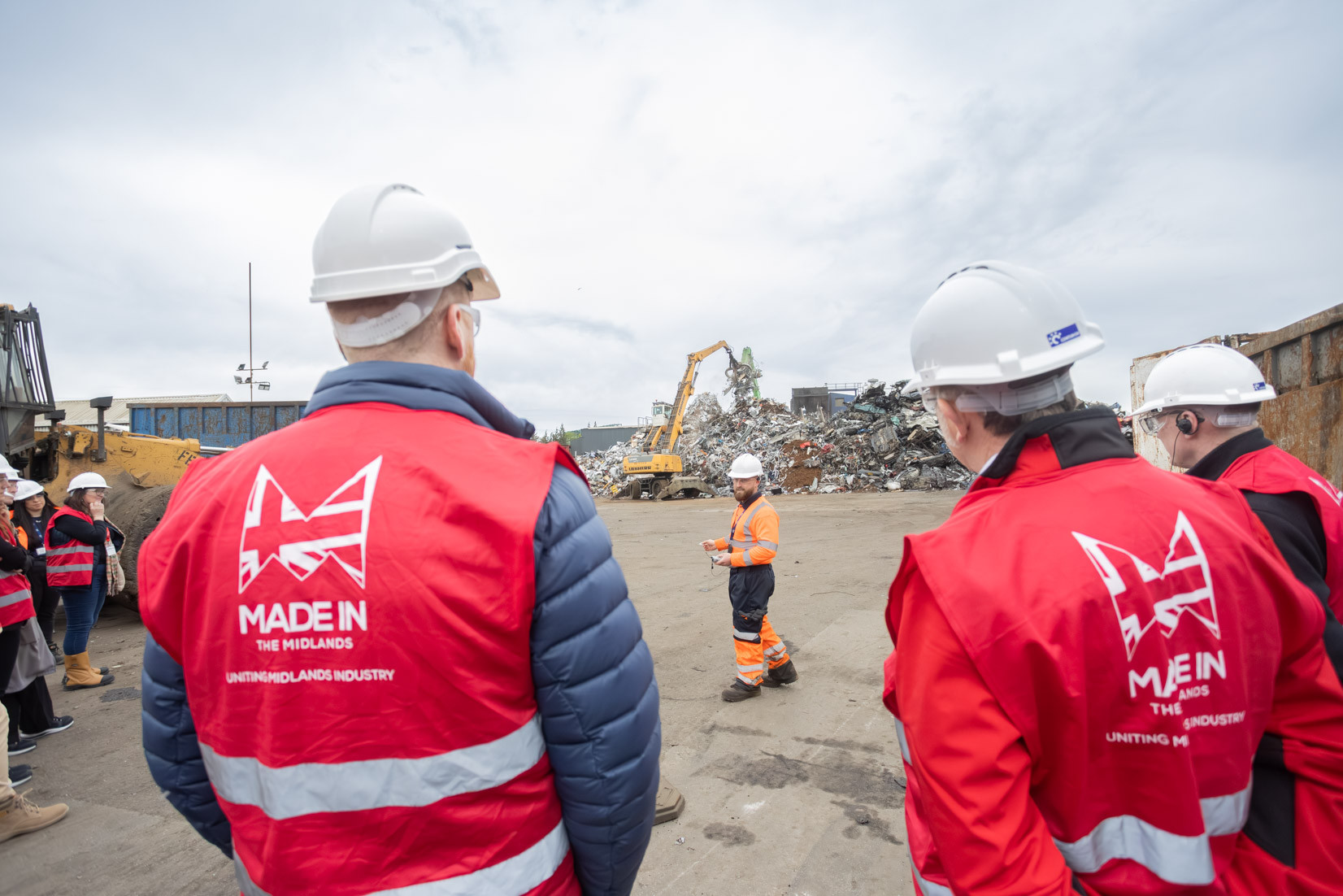
Out in the yard, Oliver Latham, General Manager, EMR Birmingham talks members through EMR’s large-scale processing environment and the realities of material recovery at volume.
Oliver talked members through hammers, grid sizes, feed mix and foreign objects with the confidence of someone who knows exactly how expensive small mistakes can become. "A lot of it's judged on tonnes," he said, explaining how the team balances throughput against wear, energy use and output quality.
He then brought that balance to life with one of the day's most memorable phrases. Pre-shredding, he explained, helps create a "fluffy product", giving the site "more throughput and less energy consumption".
It was a practical phrase, grounded in the realities of the yard, and it made the point immediately clear.
Even at this scale, performance still comes down to flow, feel and constant adjustment. A foreign object that slips through inspections can damage hammers, interrupt output and create unnecessary cost. Throughput depends not just on horsepower, but on discipline, sequencing and operational awareness.
The numbers gave that balancing act real weight. The team described a target of around 220 tonnes an hour through the shredder, with the site processing around 1,700 tonnes a day. Yet the figures never felt like showmanship. They felt like live operational targets - the kind any manufacturer in the room would recognise immediately.
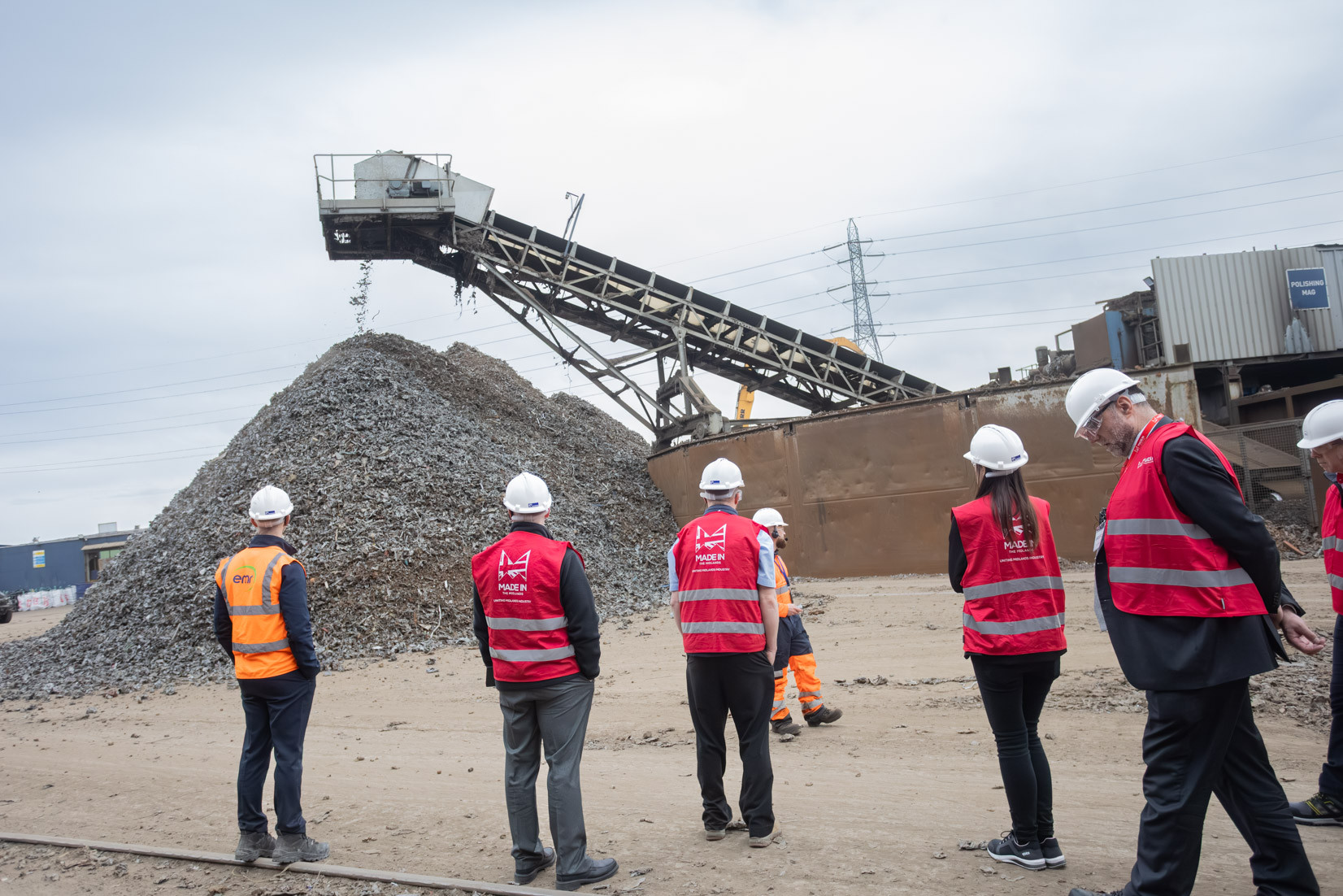
Members step into EMR’s yard to see recovery at scale, where processed material moves through the site’s wider industrial operation.
What stayed with members
By the time the group looped back, the value of the visit had become clear.
EMR had not simply shown members an unusual facility. It had made visible a part of modern manufacturing that often stays out of sight. Once you see the end of the chain properly, it becomes much harder to think about design, materials and compliance in the same old way.
That was the quiet strength of the morning.
EMR turned battery recycling from a vague future talking point into something concrete - an industrial capability, a safety challenge, a commercial calculation and, increasingly, a competitive one. As Helen put it, the work is no longer only about the material "coming out today", but about "what's actually going to happen in the future".
For manufacturers navigating electrification, regulation and supply pressure at the same time, that matters.
EMR is not just dealing with what comes off the road. It is helping define what responsible industrial recovery looks like while the rules, technologies and volumes are still evolving.
And that was the real value of the tour. It showed that end of life is no longer the end of the story.
It is fast becoming one of the most important parts of it.