






Centralised Vacuum Systems vs. Venturi Systems: Reducing Energy Costs in UK CNC Manufacturing
Many UK manufacturers continue to rely on compressed air-driven ejector (Venturi) vacuum pumps to generate vacuum for CNC hold-down applications. Although simple to install, these systems are often highly energy-intensive, place significant demand on site compressors, and become increasingly inefficient and costly as production scales.
This case study demonstrates how a UK CNC plastic machining specialist replaced multiple Venturi vacuum systems with a centralised mechanical claw vacuum system from BECKER UK. By switching from compressed air generation to energy-efficient mechanical vacuum pumps, the company significantly reduced electricity consumption, lowered maintenance costs, and achieved a return on investment in under two years.
As a leading supplier of vacuum pumps, compressors and centralised vacuum systems across the UK, BECKER works with manufacturers in a wide range of industries to optimise vacuum performance, improve energy efficiency, and ensure systems are correctly specified for long-term operational demands. This project highlights the importance of selecting the right vacuum technology, not only for performance, but for sustainability and cost control.
About the Customer: Precision CNC Plastic Machining in the UK
Our customer is a UK-based contract manufacturer specialising in precision CNC machining of plastics. They also manufacture high-accuracy diffusion-bonded manifolds for:
- Medical devices
- Healthcare technology
- Life sciences
- Diagnostics equipment
Vacuum systems are critical to their operation. They use vacuum hold-down systems to securely position plastic plates and fixtures during CNC machining, ensuring precision and repeatability.
The Challenge: High Energy Consumption from Venturi Vacuum Pumps
Originally, the company generated vacuum using compressed air-driven Venturi ejector pumps installed across multiple CNC machines. While effective at producing vacuum locally, ejector vacuum pumps:
- Require significant compressed air consumption
- Increase load on site compressors
- Drive up electricity costs
- Increase maintenance demands on compressed air systems
As the company expanded and added more CNC machines, the number of Venturi systems increased, significantly raising compressed air demand and overall energy consumption. With UK industrial energy prices rising, the business needed a more energy-efficient vacuum solution.
Our customer approached us to help them reduce their energy consumption and maintenance costs.
Why Ejector (Venturi) Vacuum Systems Are Inefficient
Ejector vacuum pumps operate using compressed air to generate vacuum via the Venturi principle. However, compressed air is one of the most expensive utilities in manufacturing. Compared with mechanical vacuum pumps, ejector systems typically:
- Consume substantially more energy per m³/h of vacuum generated
- Run continuously regardless of actual vacuum demand
- Increase wear and servicing requirements on compressors
- Are difficult to scale efficiently across multiple machines
For facilities operating multiple CNC machines, decentralised Venturi systems often become costly and inefficient over time.
The BECKER Solution: A Centralised Mechanical Claw Vacuum System
BECKER site specialists conducted a full site survey to find the possibility of effectively and efficiently reducing energy consumption whilst also driving down maintenance costs. Our team identified an opportunity to replace the decentralised ejector systems with a centralised vacuum system. Previously, the customer used compressed air via a simple Venturi system to generate a vacuum on the machines, however, as the product mix had changed over the years, the company has required a greater number of vacuum systems across many of their machines.
The new installation included:
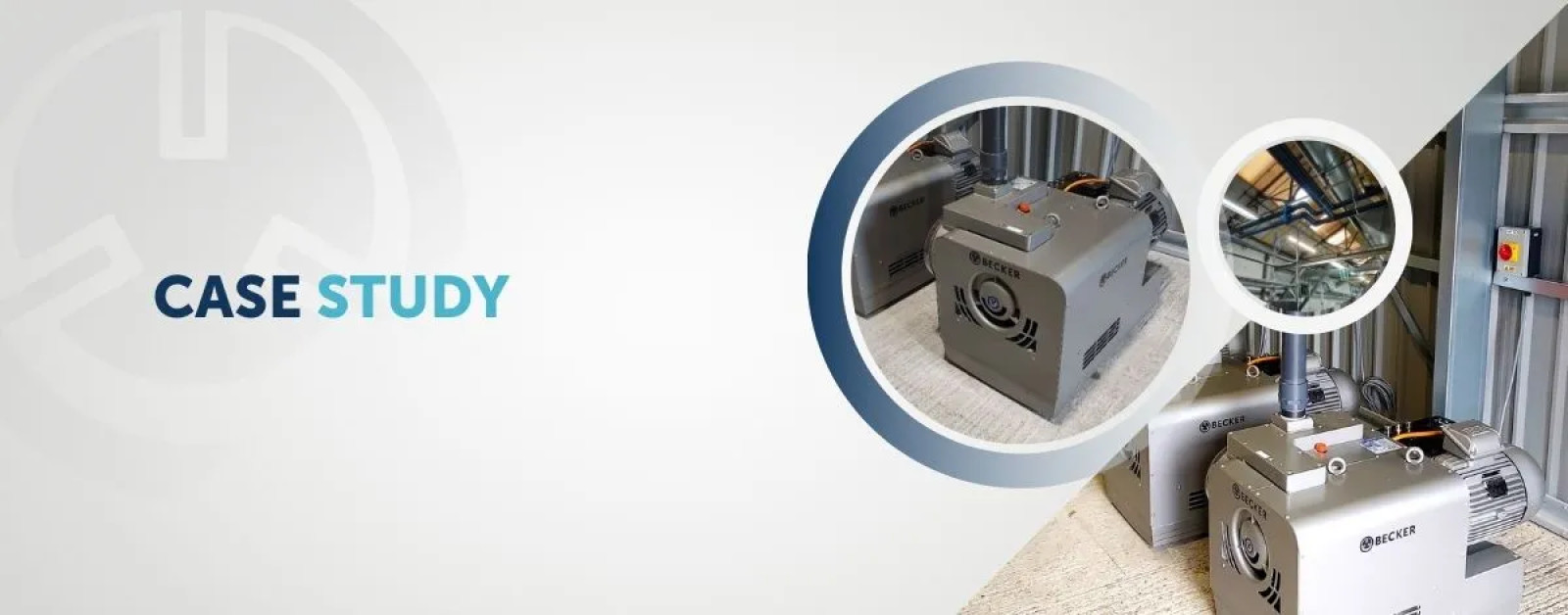
- 4 × BECKER BCV 300 oil-free claw vacuum pumps
- Integrated inverter (variable speed) drives
- A central vacuum receiver
- Intelligent vacuum control via a Vacuum Plus controller
Mechanical Vacuum Pumps vs Ejector Vacuum Pumps
Below is a direct comparison between compressed air ejector systems and mechanical claw vacuum pumps:
| Feature | Ejector (Venturi) Vacuum Pump | Mechanical Claw Vacuum Pump |
| Energy Source | Compressed Air | Electricity |
| Energy Efficiency | Low | High |
| Operating Cost | High | Significantly Reduced |
| Maintenance | High Compressor Wear | Low, Oil-Free Design |
|
Scalability |
Limited | Ideal for Centralised Systems |
| Demand Control | None | Variable Speed Control |
| ROI Potential | Low | High (often < 2 years) |
Mechanical vacuum pumps operate directly on electricity and eliminate the need to generate compressed air for vacuum production, dramatically reducing energy consumption.
Intelligent Demand-Based Vacuum Control
The centralised system is controlled by BECKER’s Vacuum Plus controller, which automatically adjusts pump speed to match real-time demand, reducing electricity consumption, maintaining stable vacuum levels, lowering equipment wear, and optimising overall system efficiency. Unlike Venturi systems that consume compressed air continuously, the inverter-driven claw pumps only use the energy required at any given time, drastically improving cost efficiency and delivering measurable savings for our partner.
Results: Energy Savings and ROI in Under Two Years
By replacing the ejector vacuum pumps with a centralised mechanical claw vacuum system, the customer achieved:
- Significant reduction in compressed air consumption
- Lower electricity usage
- Reduced compressor maintenance costs
- Improved system reliability
- Return on investment in less than two years
In addition to cost savings, the new system supports the company’s sustainability objectives by reducing overall energy consumption and associated carbon emissions.
“We worked closely with BECKER in designing how we would do the installation, and we basically agreed we would do it in two phases, and that really helped minimise the disruption to the production facility, and the actual installation itself went very smoothly. From our experience with BECKER, I would definitely recommend them.”
Managing Director
Why Choose a BECKER Claw Vacuum Pump:
BECKER claw vacuum pumps are oil-free mechanical vacuum pumps designed for continuous industrial operation across UK manufacturing sectors. Key benefits include:
- Oil-free compression chamber
- Low maintenance requirements
- Long service intervals
- Energy-efficient operation
- Ideal integration into centralised vacuum systems
- Reliable vacuum performance for CNC hold-down applications
Claw technology offers a robust and scalable alternative to compressed air ejector systems.
Considering Replacing Your Venturi Vacuum System?
If your facility is currently using ejector or Venturi vacuum pumps for CNC machining or manufacturing processes, there may be significant opportunities to reduce energy consumption and operating costs. BECKER UK offers free site surveys and energy audits to assess whether a centralised mechanical vacuum system could deliver measurable savings for your business.
Speak to our UK vacuum system specialists today to find out how much energy your operation could save.